Customers want to be treated like real human beings. Personalized interactions, anticipating their needs, and delivering highly relevant offers are ways to make them feel valued. But how can you uncover all these insights? Customer profiling is the gateway to understanding your customers more deeply.
In today’s modern customer service landscape, customer profiling is a critical foundation for delivering services that are truly relevant and meaningful for every type of customer. This article explores practical strategies, types, and examples of customer profiling that align with current customer expectations.
What Is Customer Profiling?
Customer profiling aims to create detailed profiles of your customers based on their characteristics, needs, behaviors, and preferences. It helps businesses understand who their customers are, what they want, and how best to serve them. Customer profiling goes beyond basic demographic data; it includes psychographics, buying behavior, interaction history, and even browsing activity on your website and e-commerce platforms.
Types of Customer Profiling
From demographic insights to behavioral patterns, here are the main types of customer profiling every business needs to understand.
1. Demographic Customer Profiling
Demographic data gives you a quantitative overview of who your customers are. It helps with initial market segmentation and geographic targeting. This is the fundamental starting point before collecting deeper data. Key demographic data includes:
- Age
- Gender
- Income Level
- Education
- Employment Status
2. Psychographic Customer Profiling
Psychographic profiling dives deeper into the emotional and internal aspects that influence customer decisions. It helps you understand why customers act a certain way, what motivates them, and how your brand can connect with their personal values. Important psychographic data includes:
- Personal Values
- Personality Traits
- Lifestyle
- Interests
- Opinions
- Beliefs
3. Geographic Customer Profiling
Geographic profiling focuses on where your customers are located. Understanding this helps businesses tailor offerings and marketing strategies to local conditions. Key data includes:
- Country
- Province/State
- City
- Postal Code
- Climate
4. Behavioral Customer Profiling
Behavioral analysis provides concrete insights into what customers do, enabling businesses to predict future actions and personalize experiences based on their activities. Data to collect includes:
- Interaction History
- Purchase History
- Testimonials or Reviews
- Product Usage
- Loyalty
- Online Search Behavior
- Social Media Engagement
5. Firmographic Customer Profiling (B2B)
Firmographics are similar to demographics but applied to the B2B context. They help businesses identify potential clients based on how well they match the ideal company profile. Key firmographic data includes:
- Company Size
- Industry Type
- Number of Employees
- Annual Revenue
- Geographic Location
- Company Reputation
The more accurate your customer profiles are, the easier it becomes to deliver relevant, personalized, and high-impact experiences. Ultimately, customer profiling is more than just data; it’s the foundation of a stronger, more effective marketing strategy that drives long-term growth.
The Role of Customer Profiling in Customer Service
Customer profiling transforms your customer service from reactive to proactive and personalized. Here are the key roles it plays:
1. Enables Personalized Interactions
With rich customer profiles, agents can do more than address customers by name. They can refer to past interactions or purchases, adjust their tone, and offer tailored solutions.
A complete customer profile makes every interaction feel unique, making customers feel appreciated as individuals.
2. Improves Efficiency and Problem Resolution
When agents have instant access to customer profiles, they can quickly understand the context, history, and communication preferences. This eliminates repetitive questions that often cause frustration.
As a result, problem-solving becomes faster and more accurate, reducing average handling time and increasing first contact resolution rates.
3. Anticipates Needs and Issues
By analyzing patterns from customer profiles, businesses can identify trends and predict needs or potential problems before customers even notice them. For example, if a customer frequently faces technical issues, you can proactively reach out with updates or guidance.
4. Boosts Upselling and Cross-Selling
When you understand a customer’s interests and purchase history, recommendations become more relevant. This increases upselling and cross-selling opportunities because the suggestions feel helpful rather than sales-driven.
5. Increases Customer Satisfaction and Loyalty
Customers who feel understood and personally served are more satisfied and satisfaction naturally turns into long-term loyalty. Customer profiling helps build strong emotional connections, turning customers into brand advocates and boosting word-of-mouth referrals.
Customer profiling elevates customer service from simply solving problems to delivering experiences that feel intentional and genuinely customer-centric. By equipping teams with deeper insights, businesses can respond faster, personalize more effectively, and build stronger relationships.
Over time, this level of understanding becomes a competitive advantage, one that drives loyalty, advocacy, and long-term customer value.
How to Create Customer Profiling
Customer profiling starts with collecting the right data and updating it regularly. It’s a long-term investment that allows you to serve customers with unmatched precision.
1. Collect Customer Data
Begin with demographic data from sign-up forms or surveys to understand the basics. Then, enrich your data using transactional insights from POS or e-commerce systems.
Qiscus CDP
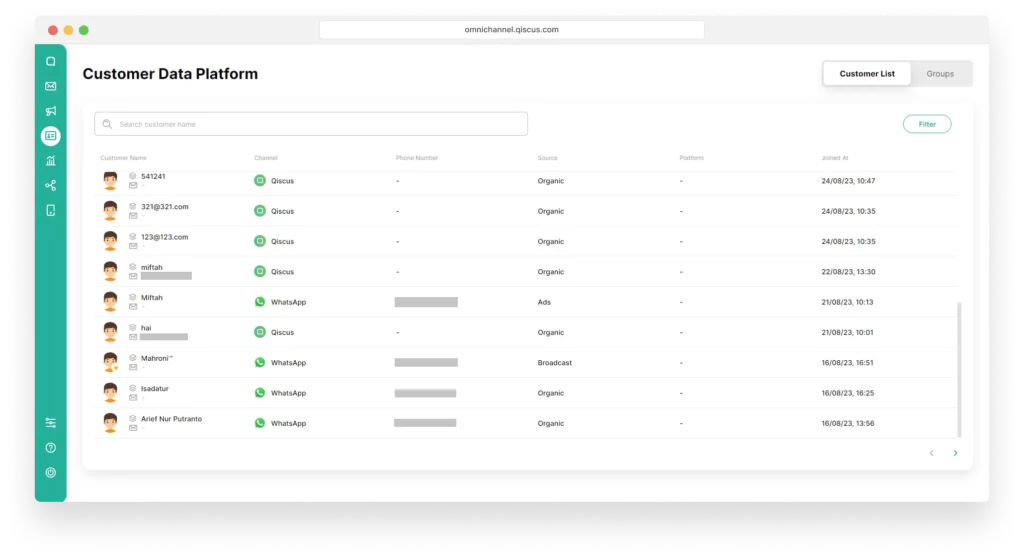
Interaction data such as calls, chats, emails, and social media activity is equally crucial. With Qiscus CDP integrations, you can gather data from multiple channels and analyze it easily to build comprehensive customer profiles.
AI Agent
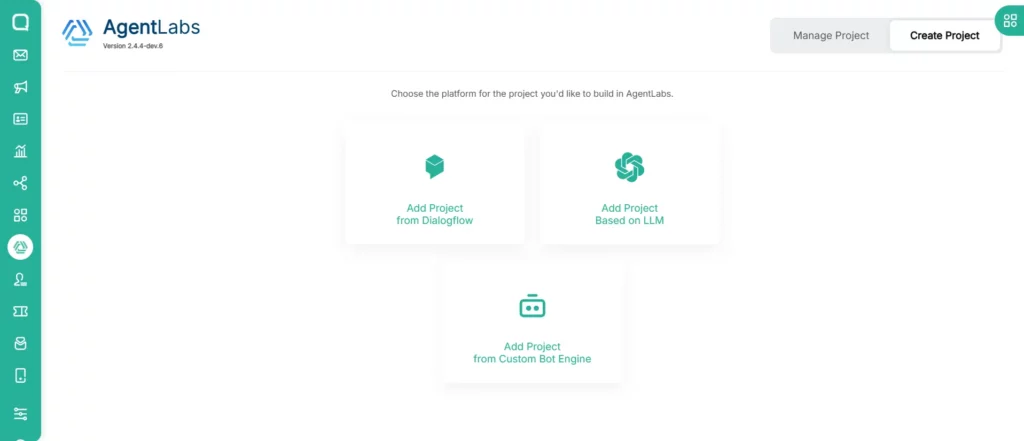
You can also use Qiscus AgentLabs to ask common data-collection questions automatically. Finally, include survey responses and feedback such as Net Promoter Score (NPS) to understand customer perception.
2. Segment Your Customers
Use gathered insights to group customers into cohesive segments, such as loyal customers, technical issue customers, or price-sensitive customers. Accurate segmentation is essential for effective personalization.
3. Create Detailed Customer Personas
Develop semi-fictional personas for your major segments. Include names, backgrounds, goals, pain points, shopping habits, and communication preferences.
Personas help teams from marketing to customer service, build empathy and serve customers better.
4. Integrate Profiles Into Customer Service Workflows
Ensure agents can access customer profiles instantly. For example, when chats enter through the Qiscus omnichannel platform, the customer’s profile should automatically appear with their history and preferences.
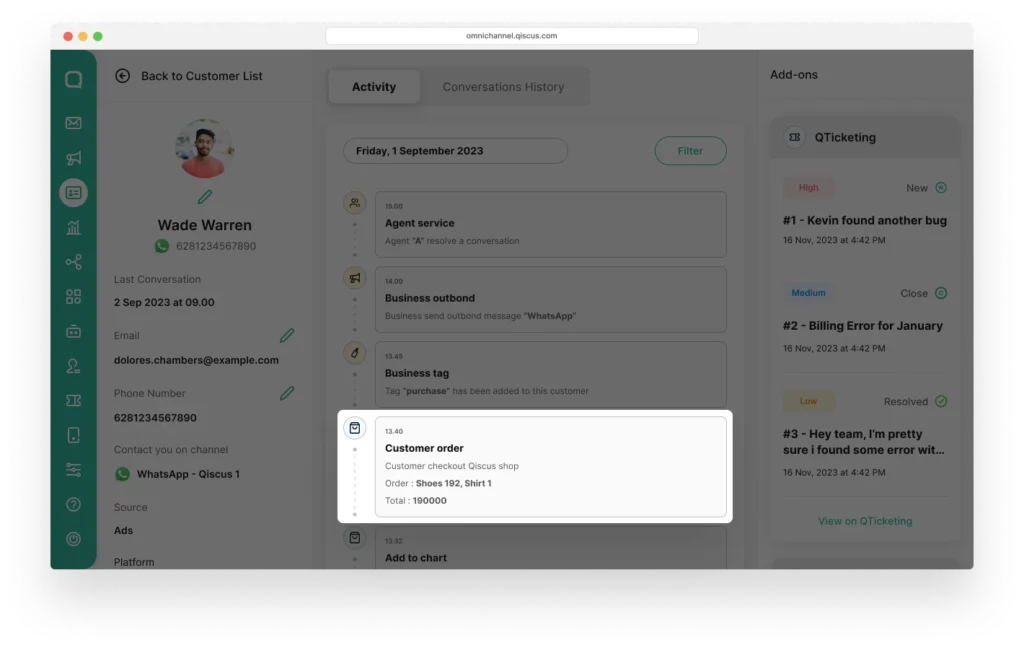
Conversation history in Qiscus Omnichannel Chat helps you build complete profiles, ensuring that agents stay in context from the first second.
With WhatsApp Business API, you can also deliver personalized messages directly on customers’ preferred channels.
5. Continuous Updates and Iteration
Customer data evolves. Set clear processes to update profiles regularly based on new interactions, market trends, and feedback.
Use agent insights and analytics to refine your profiling strategy over time.
6. Involve Cross-Department Teams
Marketing, sales, and product teams all have valuable customer data and perspectives. Cross-department collaboration helps you build holistic and accurate customer profiles.
7. Prioritize Data Privacy and Ethics
Always comply with data privacy regulations such as GDPR, CCPA, or local Indonesian policies. Transparency is essential to maintaining customer trust.
Give customers control over their data and clearly communicate how it enhances their experience.
When done well, customer profiling empowers every team to deliver more relevant, timely, and thoughtful experiences. With the right tools and collaboration across departments, businesses can transform raw data into meaningful insights that drive better service, stronger relationships, and long-term customer loyalty.
Examples of Customer Profiling Across Industries
Here are sample personas from different industries, showing how insights shape well-defined customer profiles:
1. E-commerce (Fashion)
- Persona: “Fashionista Fara”
- Demographic: Female, 28, Jakarta, Digital Marketing Specialist, middle-upper income.
- Psychographic: Follows fashion trends, impulsive buyer, values originality and sustainability, active on Instagram and TikTok.
- Behavior: Browses after work, buys 2–3 items monthly, prefers unique local brands, responds to flash sales.
- Needs: Trendy collections, competitive pricing, fast checkout, free shipping.
- Communication Preference: App notifications/IG DM, email confirmation, live chat for size questions.
2. Banking (Digital Services)
- Persona: “Pragmatic Professional – Budi”
- Demographic: Male, 38, Surabaya, Project Manager.
- Psychographic: Values efficiency, security, and 24/7 accessibility.
- Behavior: Heavy mobile banking user, invests via app, calls CS only for urgent issues.
- Needs: Stable banking app, layered security, real-time notifications, responsive chatbot.
- Communication Preference: App notifications, WhatsApp for non-urgent topics, phone for emergencies.
3. Healthcare (Telemedicine)
- Persona: “Family-Focused Mom – Siti”
- Demographic: Female, 45, mother of two, lives in a small city.
- Psychographic: Prioritizes family health, seeks trustworthy information.
- Behavior: Uses telemedicine for child consultations, buys medicine online, active in community WhatsApp groups.
- Needs: Easy access to specialists, flexible schedule, digital prescriptions.
- Communication Preference: In-app chat, WhatsApp Broadcast, call center for technical issues.
4. B2B (SaaS Customer Service Platform)
- Persona: “Progressive CS Manager – Dian”
- Demographic: Female, 42, Bandung, CS Manager at a mid-sized logistics company.
- Psychographic: Seeks efficiency, values ROI, data-driven decision making.
- Behavior: Attends webinars, reads case studies, tries SaaS free trials.
- Needs: Integrated omnichannel platform, AI automation, performance analytics.
- Communication Preference: Email updates, LinkedIn networking, product demos, live chat for technical questions.
5. Hospitality (Boutique Hotel)
- Persona: “Explorative Traveler – Alex”
- Demographic: Male, 30, travel vlogger.
- Psychographic: Seeks unique and aesthetic experiences.
- Behavior: Books through specialized platforms, asks for local recommendations, posts reviews.
- Needs: Fast check-in/out, personalized local tips, strong Wi-Fi, Instagrammable spaces.
- Communication Preference: In-app/WhatsApp chat, Instagram DM, email confirmations.
These examples show how customer profiling can look very different across industries, yet the goal remains the same: to understand customers deeply and serve them more meaningfully. By defining clear personas, businesses can tailor their services, communication styles, and product offerings with far greater precision. Whether you’re in e-commerce, banking, healthcare, B2B, or hospitality, strong customer profiles help you deliver experiences that truly resonate and drive long-term loyalty.
Ready to Understand Your Customers More Deeply?
Customer profiling is a fundamental investment that can transform your customer service. By understanding who your customers truly are behind every interaction, you can turn generic service into highly personal, proactive, and memorable experiences.
Contact Qiscus today for an in-depth consultation and discover how our integrated solutions can help you build intelligent customer profiling and optimize your communication strategy.