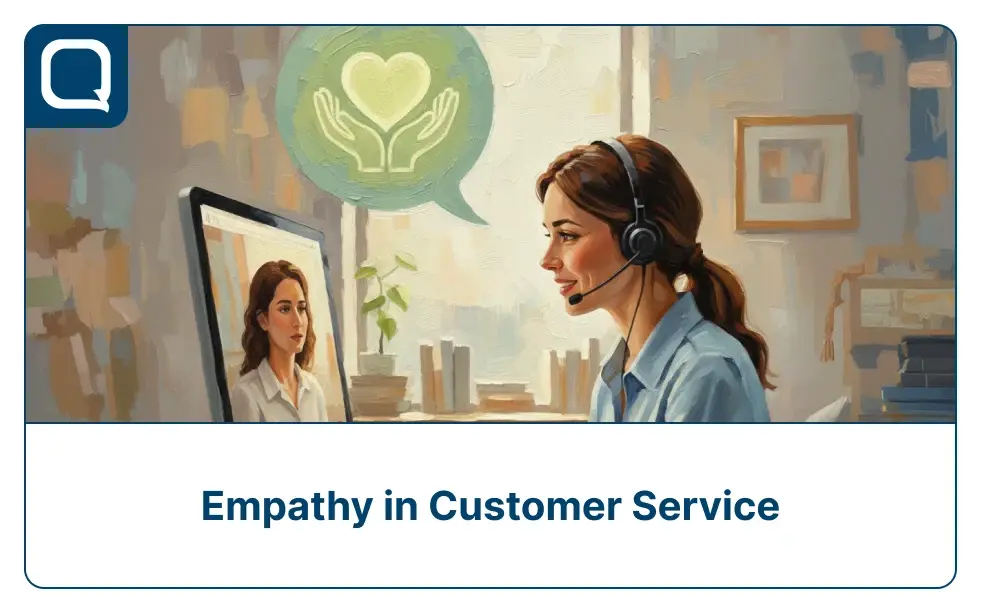
Speed is the baseline, automation is common, and self-service is everywhere. But when something goes wrong, when a payment fails, a delivery is delayed, or a system crashes, what customers remember is not the script. They remember how your brand made them feel.
Across Southeast Asia, such as Malaysia, the Philippines, and Singapore, customers are highly digital, highly vocal, and highly responsive to service experiences. In markets where messaging apps dominate and complaints can go public instantly, empathy is strategic.
This article explores why empathy in customer service matters, how leading companies operationalize it, and how businesses in SEA can scale empathy without sacrificing efficiency.
What Is Empathy in Customer Service?
Empathy in customer service has evolved. It is no longer about adding extra apologies or soft language to every response. Modern empathy is structured, intentional, and aligned with operational clarity. It ensures customers feel understood while still receiving accurate and efficient solutions.
Remember, the goal is not to slow down operations, but to humanize them. Empathy in customer service consists of four essential elements:
1. Recognizing the Customer’s Emotional State
Empathy begins with awareness. Customers may approach support feeling frustrated, anxious, confused, or urgent. Identifying emotional signals, through tone, word choice, or context, allows agents to adjust their communication style accordingly. This prevents mechanical replies that ignore the customer’s mindset.
2. Acknowledging the Situation Clearly
Acknowledgment is more powerful than apology alone. Clearly stating the issue, “I understand this delay affects your upcoming event” or “I see how this impacts your payroll schedule”, shows attentiveness. Customers want to know their specific situation is understood, not treated as a generic case.
3. Responding with Context and Ownership
Empathetic service communicates responsibility. Instead of deflecting with policies, agents explain what will be done, what the next steps are, and when updates can be expected. This builds confidence and reduces uncertainty, even if resolution takes time.
4. Providing Solutions Without Sounding Scripted
Templates improve efficiency, but rigid scripts reduce authenticity. Empathy requires personalization, adapting responses to match the scenario while maintaining operational consistency. The message should feel intentional, not automated.
Empathy in customer service is the art of humanizing structured processes. It ensures customers feel heard while still receiving timely and effective solutions. And empathy is a disciplined practice that strengthens trust, reduces escalation, and transforms transactions into relationships.
Why Empathy Matters More Than Ever
Automation, AI, and workflow optimization have significantly improved response times, but efficiency alone no longer defines quality. Customers remember how they felt during an interaction, not just how quickly it was resolved.
As digital conversations increasingly shape brand perception, empathy has shifted from a “soft skill” to a competitive necessity.
1. Customers Evaluate Emotion, Not Just Speed
Operational metrics like response time and SLA compliance remain important. However, Customer Satisfaction (CSAT) scores often reflect emotional experience more than technical performance.
A fast but cold reply can feel dismissive. In contrast, a slightly delayed but thoughtful response that acknowledges context and concern can strengthen trust. Customers assess whether they were heard and understood.
b. Southeast Asia is Relationship-Driven
Cultural expectations influence how service quality is perceived. In Malaysia and the Philippines, communication tends to be relational and conversational. Warmth, attentiveness, and respectful tone signal genuine care.
In Singapore’s enterprise-focused market, professionalism and clarity are critical, but attentiveness still defines service excellence. Ignoring emotional nuance can create perception gaps, even when the technical resolution is correct.
c. Digital Platforms Amplify Reactions
Messaging apps and social media platforms accelerate feedback cycles. A single poorly handled interaction can escalate publicly within minutes, shaping broader brand perception.
Empathy acts as a protective layer. Thoughtful acknowledgment and responsible communication can prevent minor frustrations from becoming reputational risks, often before internal metrics detect dissatisfaction.
Customer service is judged on emotional intelligence, cultural awareness, and communication quality. Organizations that combine efficiency with empathy will not only resolve issues effectively, they will build stronger loyalty in an increasingly transparent digital landscape.
What Happens When Empathy Is Missing
Over the past five years, companies have accelerated investments in AI chatbots, omnichannel dashboards, automated workflows, and SLA monitoring systems. Operational metrics improved and support costs became more predictable. On paper, customer service performance looked stronger than ever.
Yet beneath these improvements, a subtle shift occurred. Conversations became increasingly transactional. Customers received accurate answers, but many no longer felt understood. In relationship-driven markets across Southeast Asia, this emotional gap creates risks that traditional performance dashboards often fail to detect.
1. Conversations Become Transactional
Automation prioritizes speed and consistency, but it often removes conversational nuance. Responses become templated, structured, and optimized for closure rather than connection. While technically correct, they may lack acknowledgment, reassurance, or personalization.
2. Customers Churn Silently
Not all dissatisfied customers complain. Many simply disengage, switch providers, or reduce their brand advocacy.
Silent churn is especially dangerous because it provides little warning. Without emotional connection, loyalty weakens, even when service appears technically adequate.
3. Frustration Escalates Faster
When empathy is missing, dissatisfaction surfaces quickly. Messaging platforms make it easy for customers to amplify complaints publicly or escalate dissatisfaction across channels. Even if SLA targets are met, the emotional tone of the interaction may trigger negative perception.
4. CSAT Drops
Companies often see declining customer satisfaction scores even when response times improve. This disconnect occurs because customers evaluate not only how fast they were served, but how they felt during the interaction. Efficiency metrics alone cannot capture emotional quality.
5. Agents Feel Disconnected
Highly automated environments can reduce agents’ sense of ownership. When conversations are fragmented across dashboards and pre-written responses, agents may feel like process operators rather than problem solvers. Over time, this weakens engagement and internal morale.
Speed and automation are essential in modern customer service, but without emotional intelligence, they create invisible risks. Customers may not always complain loudly; instead, they disengage quietly, switch providers, or reduce brand advocacy. Sustainable customer experience requires intentional design that blends efficiency with human connection.
7 Best Practices on How to Build Empathy in Customer Service
Embedding empathy into customer service is no longer left to individual personality or soft skills alone. Leading companies design empathy into their operational systems, training frameworks, and technology architecture. By structuring how empathy is delivered, they ensure consistency without sacrificing authenticity, allowing teams to scale service while maintaining emotional intelligence.
1. Leadership Must Model Empathy First
Customer experience mirrors internal culture. If managers prioritize speed over understanding, agents will do the same with customers.
Leaders should practice active listening, provide balanced feedback, and show emotional awareness in team interactions. When employees feel respected and supported, they are more likely to deliver empathetic service externally.
2. Align KPIs Beyond Speed
Customer service metrics like AHT and SLA are important, but they should be balanced with CSAT trends, sentiment insights, and qualitative feedback. When evaluations include emotional quality, understand that thoughtful communication matters. What gets measured ultimately shapes behavior.
3. Train Emotional Intelligence Structurally
Empathy improves through practice. Role-play high-pressure cases, review real transcripts, and coach tone and acknowledgment techniques. With repetition and feedback, empathy becomes a professional skill embedded into daily workflows.
4. AI + Human Empathy: The Hybrid Model
A common misconception is that automation reduces empathy. In practice, AI can strengthen it when deployed strategically. AI handles high-volume, repetitive interactions such as order tracking, basic FAQs, and routine account inquiries. Human agents focus on billing disputes, emotionally sensitive complaints, escalated cases, and high-value accounts.
5. Sentiment Detection and Intelligent Routing
Advanced support systems now incorporate sentiment analysis to detect frustration in real time. When customers use negative language or display repeated dissatisfaction, the system flags the interaction and prioritizes escalation.
This proactive approach prevents public backlash, reduces churn risk, and minimizes emotional fatigue loops within support teams. Empathy shifts from reactive damage control to proactive relationship management.
6. Design Flexible Conversation Frameworks
Use structured conversation flows—such as acknowledge → clarify → resolve → reassure—to guide consistency and quality. Clear frameworks help agents respond systematically, especially under pressure.
At the same time, avoid rigid scripts. Allow room for personalization so responses feel natural and authentic, not robotic.
7. Protect Agent Wellbeing
Empathy fades when teams are exhausted. Overloaded agents may still resolve tickets, but the emotional quality drops. Balanced workloads, fair distribution, and mental health support help sustain emotional stamina. When agents feel supported, they can consistently support customers better.
Empathy is now an operational capability. Companies that embed structured frameworks, hybrid AI models, and intelligent routing into their support systems transform empathy from individual effort into scalable strategy. When designed intentionally, empathy can strengthen both customer trust and long-term business resilience.
Small Emotional Moments Define the Entire Experience
Customer experience is often measured through resolution rates and turnaround time, but loyalty is shaped in emotionally charged moments. Customers rarely remember routine transactions; they remember how a company responded when something went wrong. In high-stakes situations, the tone of communication matters as much as the solution itself.
1. Time-Sensitive Situations Intensify Emotions
A delayed delivery before Hari Raya in Malaysia is more than a logistics issue, it disrupts a meaningful celebration. A failed bank transfer before payroll in the Philippines creates stress that goes beyond inconvenience. A network outage affecting a business client in Singapore directly impacts revenue and professional credibility. In each case, urgency amplifies emotional sensitivity.
2. Customers Seek Reassurance
During critical moments, policy explanations and scripted responses are rarely enough. Customers want acknowledgment, clarity, and assurance that their concerns are being taken seriously. Even when the solution requires time, empathetic communication reduces anxiety and builds trust.
3. Minor Issues Can Feel Major Without Empathy
When emotional cues are ignored, small problems can escalate disproportionately. A neutral but cold response may be interpreted as indifference. Without reassurance, customers may perceive the situation as more severe than it actually is, increasing dissatisfaction.
4. Digital Platforms Amplify Emotional Reactions
In today’s social and messaging-driven environment, dissatisfaction spreads quickly. A single poorly handled interaction can turn into a public complaint or viral post. The emotional tone of one conversation can influence broader brand perception.
Operational efficiency resolves problems, but emotional intelligence protects relationships. Companies that recognize and manage critical emotional moments effectively reduce escalation risks and strengthen long-term trust. In competitive markets, the ability to combine timely solutions with empathetic communication becomes a decisive advantage.
Empathy in Crisis Moments: When Brand Trust Is Tested
Crisis moments expose the true strength of a company’s customer experience strategy. During service disruptions, outages, or operational failures, customers are already in a heightened emotional state. In these situations, speed matters, but tone matters even more.
How businesses communicate during high-pressure moments often determines whether customers remain loyal or begin searching for alternatives. Leading companies understand that empathy must lead communication, with technical explanations following afterward.
1. Singapore Airlines
Singapore Airlines has encountered booking system outages and flight delays over the years. During these disruptions, the airline consistently issued timely updates, acknowledged inconvenience directly, and communicated concrete next steps for affected passengers.
Rather than relying solely on technical statements, their communication balanced empathetic language with professional clarity. In Singapore’s service-driven market, this combination reinforces brand credibility even during operational setbacks.
2. PLDT
In the Philippines, telecommunications disruptions can escalate rapidly on social media. When PLDT faced major service outages, the company responded with public apologies across platforms, real-time status updates, and clear explanations of the issue without deflecting responsibility.
By acknowledging inconvenience before discussing technical causes, PLDT helped reduce prolonged backlash. In highly social digital environments, empathetic accountability directly influences public sentiment.
3. Maybank
Digital banking outages create immediate financial anxiety. During service interruptions affecting online transactions, Maybank issued public notices, apologized clearly, communicated expected resolution timelines, and continued providing updates until services were restored.
While inconvenience could not always be avoided, transparent and empathetic communication prevented escalation into long-term distrust.
Across industries, the pattern is consistent. Businesses that lead with acknowledgment, communicate transparently, and take visible responsibility protect customer trust more effectively than those that prioritize technical defense.
In crisis moments, empathy becomes a brand safeguard. Companies that institutionalize empathetic crisis communication not only recover faster from disruption, but also strengthen long-term loyalty in the process.
How to Build Empathy with Qiscus
In Malaysia, the Philippines, and Singapore—where real-time messaging dominates customer interactions and expectations evolve quickly—businesses must balance operational precision with emotional intelligence. Speed alone is no longer enough. Empathy must be designed into systems, workflows, and leadership practices.
Here is a practical roadmap to make empathy scalable and sustainable, supported by the capabilities of Qiscus.
1. Train for Emotional Intelligence
Empathy improves through structured practice. Leading teams conduct role-play sessions for high-pressure scenarios, review real conversation transcripts, and provide peer-based feedback. These exercises train agents to recognize emotional cues, regulate tone, and respond with clarity under stress.
With Qiscus’ omnichannel dashboard, supervisors can review conversations across chat, social messaging, and other digital channels in one unified view. This enables targeted coaching based on actual interactions, not assumptions, making empathy development measurable and practical.
2. Use AI to Assist Humans
Modern agent-assist tools can suggest empathetic phrasing, summarize prior conversation context, and surface past customer frustrations. This prevents customers from repeating themselves and allows agents to enter conversations informed and attentive.
Within Qiscus’ AI-powered ecosystem, repetitive inquiries can be automated while relevant customer data is presented in real time. By reducing cognitive load, agents gain the mental space needed to respond thoughtfully, especially during peak volumes.
3. Standardize Service
Templates and workflows should provide structure while allowing personalization. Overly rigid scripts risk sounding robotic and disconnected.
Qiscus’ conversation routing and workflow configuration features enable businesses to design consistent response flows while preserving agent-level flexibility. This balance ensures service remains both efficient and human across channels.
4. Align CX Metrics with Emotional Outcomes
Many teams still focus primarily on speed-based metrics such as SLA compliance and Average Handling Time (AHT). While important, these indicators do not fully reflect emotional quality.
Forward-thinking organizations incorporate CSAT trends, sentiment indicators, and qualitative feedback into performance dashboards. With real-time monitoring across messaging platforms, Qiscus helps teams detect emotional patterns early, allowing proactive intervention before dissatisfaction escalates.
5. Build a Feedback Loop Between Customers and Teams
Empathy becomes sustainable when insights continuously inform improvement. Businesses should regularly analyze recurring complaints, emotional triggers, and customer feedback themes to refine scripts, workflows, and training priorities.
Using Qiscus’ centralized conversation data and reporting tools, teams can identify patterns across channels and turn emotional signals into actionable improvements. This closes the loop, ensuring empathy is not reactive, but continuously strengthened.
With structured training, AI-assisted workflows, flexible conversation frameworks, and emotionally aligned metrics, empathy can move beyond a soft skill. It becomes an operational advantage.
Platforms like Qiscus help embed empathy directly into customer service infrastructure, ensuring that as service becomes faster and more automated, it remains attentive, contextual, and human.
Operationalize Your Empathy with Qiscus
Empathy in customer service is the result of deliberate operational design. It depends on balanced workload distribution, AI tools that reduce cognitive strain, structured communication frameworks, cultural awareness, and leadership that prioritizes emotional quality alongside efficiency. When these elements work together, empathy becomes embedded into the system rather than relying solely on personal effort.
In Malaysia, the Philippines, and Singapore, empathy evolves into a strategic advantage. It protects brand reputation, strengthens retention, and supports sustainable growth.
Ready to design customer service that is both efficient and human? Hit up Qiscus today!