Visitors land on your page, browse for a few seconds, and leave, without a name, without a number, without a conversation. Your marketing team spent a real budget getting those people to you. And they’re gone, just like that.
This is a lead generation gap that’s quietly costing businesses across Malaysia, Singapore, the Philippines and globally, thousands in wasted acquisition spend every single month.
However, WhatsApp Click to Chat is one of the most underestimated tools available to fix it. Not because of how it works technically, but because of what it enables commercially. When done right, it turns passive website visitors into active, high-intent conversations, into customers.
What Is WhatsApp Click to Chat (and Why Does It Matter for Business)?
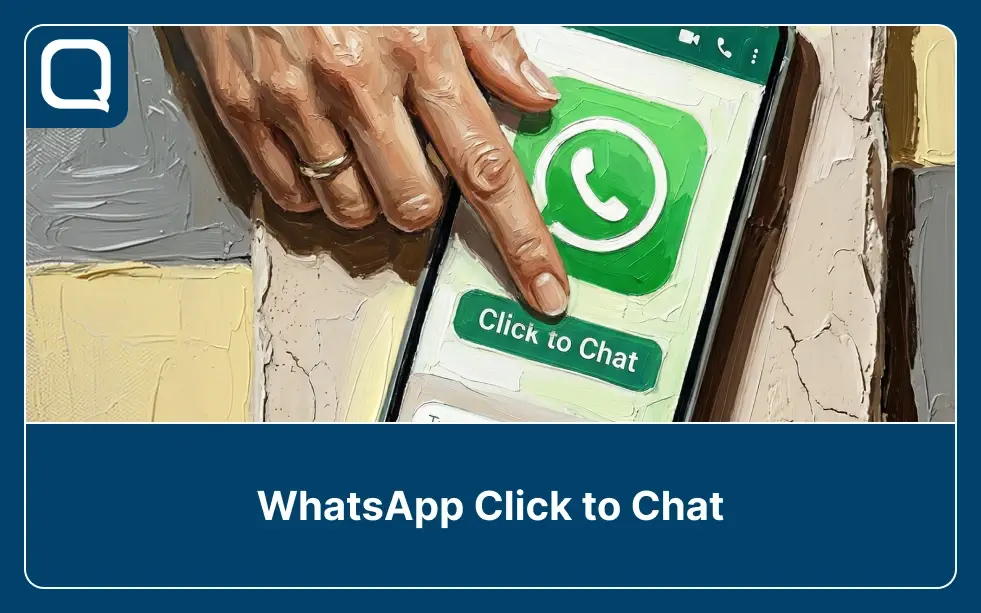
WhatsApp Click to Chat is a feature that allows businesses to create a direct link that opens a WhatsApp conversation with a pre-filled message, without requiring the user to save your number first.
The link format looks like this: https://wa.me/[phone number]?text=[pre-filled message]
When someone taps or clicks this link on mobile or desktop, then, WhatsApp opens directly with your business chat window. After that, they are ready to go.
For the user, it removes every barrier that typically kills intent: no form to fill, no email to compose, no phone call to make. For the business, it creates a direct, traceable entry point into a high-intent conversation.
Moreover, here’s what most guides on this topic get wrong, they focus entirely on how to create the link. What they miss is the more important question: how do businesses actually use WhatsApp Click to Chat to drive outcomes?
Why Customers Turn to WhatsApp First When Contacting Businesses
In Southeast Asia, messaging apps are the primary interface for commerce. In Malaysia, customers use WhatsApp to ask about product availability before ordering. In Singapore, B2B buyers send a WhatsApp message to a vendor before ever requesting a formal quote. In the Philippines, entire businesses run their sales and customer service almost exclusively through chat.
And yet, many business websites still feature:
- A contact form that asks for 8 fields upfront
- A “[email protected]” email address that replies in 24–48 hours
- A phone number that goes to voicemail
Meanwhile, consumers have already decided: if a business doesn’t respond fast, they’ll find one that does.
In the US, messaging-based customer engagement has accelerated dramatically since 2020. Consumers across demographics increasingly prefer chat over calls or email for first-contact interactions with businesses. Also, with WhatsApp’s 3 billion global users aren’t just outside the US, they’re potential customers wherever messaging is the default.
The businesses winning in this environment aren’t the ones with the best landing pages. And they’re the ones that make it effortless to start a conversation.
How the WhatsApp Conversation Funnel Works (From Click to Conversion)
Before diving into use cases, it helps to understand what WhatsApp Click to Chat actually enables from a funnel perspective. Unlike a form that captures data and hands it to a salesperson later, Click to Chat collapses the gap between interest and interaction.
Here’s how the funnel works:
1. Entry Point: Customer sees your website CTA, social media post, email footer, or even a physical QR code and taps the WhatsApp link.
2. Conversation Opens: WhatsApp launches with a pre-filled message relevant to the context (e.g., “Hi, I’m interested in your property listing on Jalan Ampang” or “I’d like to get a quote for your marketing package”).
3. Qualification & Engagement: A chatbot or live agent greets the customer, asks qualifying questions, and begins building the relationship.
4. Outcome: Appointment booked, product recommended, quote sent, support ticket resolved, or purchase completed all within the conversation.
In conclusion, this is a fundamentally different funnel from the traditional web form → email follow-up → sales call sequence. The interaction is immediate, personal, and happens on the customer’s terms, in a channel they already trust.
3 Reasons Your WhatsApp Click to Chat Isn’t Converting Leads
Here’s the uncomfortable truth: the link is the easy part. Any business can generate a wa.me link in 30 seconds. However, businesses that consistently generate revenue from WhatsApp Click to Chat are the ones who have built the right conversation infrastructure behind the link.
In addition, here are the three gaps that kill WhatsApp conversion:
1. No Response Strategy for Off-Hours Inquiries
A customer taps your WhatsApp link at 10pm on a Saturday. If your team responds at 9am Monday, that lead is gone. However, the expectation set by instant messaging is immediate engagement or at minimum, an instant acknowledgment.
Businesses without an automated greeting or chatbot lose a significant percentage of Click to Chat leads simply due to timing.
2. No Conversation Routing
A single WhatsApp number receiving sales inquiries, support tickets, billing questions, and appointment requests simultaneously is not a customer experience. It’s chaos. Without conversation routing, the quality and speed of responses becomes inconsistent, and high-value leads get lost in the noise.
3. No Link Between Conversation and CRM
If your WhatsApp conversations aren’t feeding data into your sales pipeline, you’re flying blind. Which campaign did this lead come from? What did they ask about? Did they convert? Without CRM integration, every WhatsApp conversation is an isolated event.
In conclusion, the businesses winning with WhatsApp Click to Chat have solved all three gaps. They use an omnichannel platform that provides instant automated responses, intelligent routing, and full CRM integration. Which brings us to how Qiscus fits into this picture.
The Real Business Benefits of WhatsApp Click to Chat
After understanding how Click to WhatsApp Ads work, the next question is: why do they matter for business performance? The value lies not just in starting conversations, but in how those conversations directly impact conversion, efficiency, and customer experience across the funnel.
1. Higher Conversion Rates from Existing Traffic
Click to WhatsApp Ads help businesses convert more from the same traffic by removing friction. Instead of losing users in multi-step journeys, prospects can immediately engage and get answers that move them closer to purchase.
2. Shorter Sales Cycles Through Real-Time Conversation
Real-time conversations allow businesses to address questions, objections, and concerns instantly. Also, this accelerates decision-making and reduces the time it takes for prospects to move from interest to conversion.
3. Lower Cost per Lead by Capturing Intent Early
By engaging users at the moment they click, businesses can capture intent before it fades. This reduces wasted ad spend and lowers the overall cost per lead by improving conversion efficiency.
4. Higher Lead Quality Through Self-Selection
Users who initiate conversations via WhatsApp typically have stronger intent. Because of self-selection process means businesses interact with more qualified leads, improving sales effectiveness.
5. Stronger Customer Relationships from the First Touchpoint
Conversations create a more personal and interactive first impression compared to static landing pages. This helps build trust early, making customers more likely to engage and convert.
6. Reduced Abandonment Across the Customer Journey
By eliminating unnecessary steps, Click to WhatsApp Ads reduce drop-offs at each stage of the funnel. Customers stay engaged because they can get immediate support instead of navigating complex processes.
7. Measurable, Attributable Conversations with Proper Tracking
With the right setup, businesses can track conversations back to specific campaigns and actions. Then this provides clearer insights into performance, helping teams optimize both ads and engagement strategies.
Therefore, Click to WhatsApp Ads transform traditional advertising into a conversation-driven growth engine. By improving conversion rates, reducing friction, and enabling real-time engagement, businesses can maximize the value of their existing traffic while building stronger, more meaningful customer relationships.
WhatsApp Click to Chat Business Use Cases
However, WhatsApp Click to Chat is not just another entry point, it’s a shift in how businesses capture, qualify, and convert intent. Instead of forcing customers through rigid funnels, it meets them in a familiar, low-friction environment where conversations can start instantly and evolve naturally.
This is what makes it effective across very different industries, from high-consideration purchases to everyday transactions.
1. Lead Generation for High-Consideration Products
In industries where purchases require significant decision-making such as property, insurance, education, financial services the quality of first contact matters enormously.
Property developers in Kuala Lumpur and Singapore embed WhatsApp Click to Chat links on their project listing pages. Instead of a “Request Callback” form, there’s a “Chat with Our Property Consultant” button. The pre-filled message reads: “Hi, I’m interested in [Project Name]. Can you share the price list and available units?”
This single change does three things: it captures intent in real time, provides the sales team with context before the first message, and begins a conversation at the highest moment of interest, while the prospect is literally looking at your listing.
Real estate groups across SEA report that WhatsApp-initiated leads convert at significantly higher rates than form-submitted leads, simply because the conversation starts warm, not cold.
Insurance companies in Malaysia and Singapore use a similar approach. A customer browsing a life insurance product page sees a “Get a Free Quote via WhatsApp” button. The pre-filled message includes the product name, and the chatbot handles the initial qualification (age, coverage needs, budget range) before routing to a licensed advisor.
This gives advisors better-qualified prospects and reduces the time spent on cold discovery calls.
2. Sales & Conversational Commerce
WhatsApp Click to Chat is a commerce channel in markets where WhatsApp is the default shopping interface.
Beauty and personal care brands in the Philippines run Instagram Stories with a “Shop on WhatsApp” link. A customer sees a skincare product, taps the link, and is greeted with a product catalog, shade finder, and order form all within WhatsApp.
In the US, direct-to-consumer (DTC) brands have begun integrating WhatsApp Click to Chat into their post-purchase flows. A customer completes a purchase on Shopify and receives a WhatsApp confirmation link, one tap, and they’re in a live chat with a support agent who can handle exchanges, returns, or upsell them on a complementary product.
Food & beverage businesses across SEA use WhatsApp click to chat links in their Instagram bio or Google Business profile to handle orders directly. For small and mid-sized F&B operators in Kuala Lumpur, Singapore, and Metro Manila, WhatsApp is effectively their ordering system, customer service channel, and loyalty program in one.
3. Customer Support That Customers Actually Prefer
Let’s be direct: most people would rather send a WhatsApp message than wait on hold, send a support email, or navigate a clunky chatbot on a website.
Telecommunications companies in the Philippines have moved a significant portion of their customer service interactions to WhatsApp. A customer who can’t connect to the internet sees a WhatsApp support link in their SMS notification (or on a physical SIM packaging) and can initiate a support conversation without ever visiting the website.
Banks and fintech companies in Singapore use WhatsApp Click to Chat links embedded in their app notifications. A user who receives a transaction alert can tap the link to immediately open a support conversation with full context passed to the agent rather than calling a hotline.
Above all, this matters beyond convenience. In customer experience research, speed of first response is consistently the highest-ranked factor in customer satisfaction. WhatsApp Click to Chat makes fast first response structurally possible.
4. Appointment Booking & Scheduling
For service businesses, the booking funnel is often where the most friction exists. A clinic’s online booking system requires account creation. A salon’s website sends you to a third-party calendar tool. A consultant’s intake form takes five minutes to complete.
WhatsApp Click to Chat removes all of this.
Private clinics and dental practices in Malaysia and Singapore embed Click to Chat links on their Google Business profiles. When someone searches “dentist near Bangsar” and finds the clinic, one tap on the WhatsApp link opens a conversation: “Hi, I’d like to book an appointment.” A chatbot handles date, time, and service selection.
Beauty and wellness studios in Singapore (salons, nail bars, lash studios) have moved almost entirely to WhatsApp-based bookings. The link in their Instagram bio is the primary booking channel. High-demand studios in Orchard and Tiong Bahru use automated WhatsApp flows to handle booking confirmations, reminders, and waitlist management.
Professional service firms such as consulting, legal, accounting in the US and SEA use WhatsApp Click to Chat on their LinkedIn profiles and websites to book discovery calls. The pre-filled message acts as a soft intake form: “Hi, I’m interested in discussing [service]. My company is [X] and we’re looking to [goal].”
This gives the consultant context before the call and pre-qualifies the lead in seconds.
5. CRM Lead Qualification & Sales Pipeline Management
For B2B businesses, WhatsApp Click to Chat is a powerful entry point into a structured qualification and pipeline management workflow.
SaaS companies targeting SMBs in Southeast Asia add WhatsApp Click to Chat links to their pricing page and trial signup confirmation emails. A prospect who signs up for a free trial gets a WhatsApp message: “Hi [Name], your trial is live! Chat with us on WhatsApp if you have any questions.”
The sales team uses this warm touchpoint to qualify intent, understand use cases, and schedule demos all in WhatsApp.
B2B distributors and wholesalers in Malaysia and the Philippines use WhatsApp as their primary channel for receiving and processing orders from their retail network. Wwith WhatsApp Click to Chat links embedded in their product catalogs (often shared as PDFs or via WhatsApp Catalog) let retailers initiate an order conversation with a single tap.
In conclusion, once a lead initiates a conversation via WhatsApp Click to Chat, they are fundamentally different from a cold email lead. They have raised their hand, provided their phone number implicitly, and started a real-time interaction.
How Qiscus Turns WhatsApp Click to Chat into a Revenue Engine
Qiscus is an official WhatsApp Business Solution Provider (BSP) and omnichannel customer engagement platform built for businesses that want to do more than just receive WhatsApp messages, they want to convert them.
Here’s what Qiscus enables beyond the basic Click to Chat link:
1. Automated First Response
The moment a customer initiates a chat via your WhatsApp Click to Chat link, Qiscus AgentLabs can trigger an instant, contextual greeting and qualification flow. No manual response needed. No lead left unanswered. Whether it’s 2pm on a Tuesday or 11pm on a holiday, your business is always “on.”
2. Intelligent Routing
Qiscus Omnichannel Chat centralizes all incoming WhatsApp conversations alongside messages from Instagram, Facebook Messenger, LINE, Telegram, and 20+ other channels into one unified agent inbox.
Also, conversations are automatically routed based on topic, language, customer tier, or campaign source. Your sales team handles leads. Your support team handles tickets. No overlap. No confusion.
3. CRM Integration & Lead Tracking
Every WhatsApp conversation initiated through a Click to Chat link is automatically logged in your CRM via Qiscus App Center integrations. You can tag conversations by campaign source, product interest, or pipeline stage, turning WhatsApp into a structured, trackable part of your sales process rather than a black box.
4. WhatsApp Broadcast for Re-Engagement
Once a customer has engaged via WhatsApp Click to Chat and opted in, Qiscus’s WhatsApp Broadcast feature lets you re-engage them with targeted campaigns such as promotions, appointment reminders, product launches, at scale, with full compliance with WhatsApp’s messaging policies.
5. Analytics That Close the Loop
Qiscus provides real-time dashboards showing conversation volume by channel, agent response times, resolution rates, and conversion outcomes. Then, you’ll know exactly which Click to Chat entry points are generating the most valuable conversations, and where to optimize.
Whether you’re a property developer in KL running weekend campaign leads, a clinic group in Singapore managing appointment flows, a fintech startup in Manila qualifying trial users, or a DTC brand in the US turning post-purchase interactions into upsells, Qiscus provides the infrastructure to make every WhatsApp Click to Chat interaction count.
Turn WhatsApp Click to Chat Is a Business Strategy with Qiscus
The businesses that treat WhatsApp Click to Chat as a simple convenience feature, a button on a website, will get marginal results. Also, the businesses that treat it as the entry point to a managed, automated, data-connected conversation funnel will build a genuine competitive advantage.
The link opens the door. What you do with the conversation determines everything.
If you’re ready to move from “we have a WhatsApp button” to “WhatsApp is driving measurable revenue for us,” Qiscus is built for exactly that.
Talk to our team and get started with Qiscus today!