Customers may forget your features, but they never forget how you treated them. That’s why customer service etiquette is one of the most powerful drivers of trust and loyalty in Malaysia and Southeast Asia.
In this article, we’ll break down what customer service etiquette really means, why it matters, and the 15 key etiquette practices your business needs to strengthen—especially in today’s customer-first market across Malaysia and Southeast Asia.
What Is Customer Service Etiquette?
Customer service etiquette refers to the standards, behaviors, and communication practices that shape how your team interacts with customers. It defines how your business speaks, responds, and behaves across every channel—WhatsApp, live chat, social media, email, phone, and even face-to-face interactions.
In other words, customer service etiquette is the “human quality” behind every interaction. It’s what makes a conversation feel warm instead of transactional, helpful instead of dismissive, and reassuring instead of frustrating.
Strong etiquette helps your customer service team navigate difficult conversations, reduce misunderstandings, and maintain a positive impression—even when a customer is upset or a problem is complicated.
In Southeast Asia’s highly service-oriented culture, customer service etiquette isn’t just a nice-to-have. It is a key part of your brand identity—and a major reason customers choose to return.
Why Is Customer Service Etiquette Important?
Customer service etiquette is more than polite communication—it’s a strategic asset that directly influences how customers perceive, trust, and stay loyal to your business. In markets like Malaysia and Southeast Asia, where customers value respect, clarity, and responsiveness, etiquette becomes a visible indicator of your brand’s professionalism.
Here’s why it matters:
1. It Builds Trust From the First Interaction
Customers decide quickly whether they feel safe and respected. A polite, attentive, and well-handled interaction immediately boosts confidence in your brand.
2. It Reduces Conflict and Misunderstanding
Clear language, empathy, and professionalism help prevent small issues from escalating into bigger problems.
3. It Improves Customer Satisfaction
Even when customers don’t receive the exact solution they hoped for, good etiquette makes them feel heard and valued—leading to higher satisfaction scores.
4. It Strengthens Your Brand Image
How your team communicates reflects your brand’s values. Strong etiquette signals reliability, maturity, and customer care.
5. It Improves Customer Retention
Customers are more likely to return to a business that treats them well. In Southeast Asia especially, a respectful and thoughtful tone carries significant cultural weight.
6. It Influences Word-of-Mouth and Social Reputation
Customers often share their service experiences—both good and bad. A single well-handled interaction can lead to organic referrals, while a careless one can easily go viral for the wrong reasons.
7. It Sets Your Business Apart From Competitors
In a crowded market, product differences are often minimal. Etiquette becomes a differentiator that competitors can’t easily replicate.
15 Customer Service Etiquette You Need to Improve
Strong customer service etiquette helps your team communicate with confidence, empathy, and professionalism. Here are the 15 key etiquette practices every business should improve to build trust and deliver better experiences across all channels.
1. Use a Warm and Respectful Greeting
A warm greeting creates an immediate sense of comfort and professionalism. It sets the tone for the interaction and signals to customers that they are valued from the very first line. This helps customers open up more easily and communicate their needs clearly.
In digital channels like WhatsApp and social media, a friendly greeting also compensates for the lack of facial expressions or tone, making your communication feel more human and approachable.
2. Maintain a Professional Tone of Voice
Tone communicates intent, emotion, and respect—even more so in text-based interactions. A professional tone helps reduce misunderstandings and keeps conversations calm and solution-focused, especially when dealing with frustrated customers.
In Southeast Asia, abrupt or overly casual messages can easily be perceived as rude. Staying professional ensures consistency and avoids misinterpretations that could harm your brand’s image.
3. Listen Actively Before Responding
Active listening builds trust. Customers want to feel heard, not rushed. Allow them to explain the issue fully, without interruption. This helps your team gather accurate information and understand both the problem and the customer’s emotional state.
When customers feel truly listened to, they become more patient and cooperative throughout the resolution process, even if the issue takes time to fix.
4. Respond Promptly
Response speed is one of the strongest indicators of respect in customer service. Quick replies show that your business is attentive and takes customer concerns seriously.
Slow responses, on the other hand, can make customers feel ignored or unimportant—even if you didn’t intend it. Timeliness is especially critical in Southeast Asia, where service reliability is a top expectation.
5. Avoid Blaming the Customer
Blaming customers—directly or indirectly—creates defensiveness and damages trust instantly. Even if the mistake wasn’t on your end, focus on helping them move forward.
This approach shifts the conversation from conflict to collaboration. Customers feel supported rather than judged, which leads to smoother interactions and quicker resolutions.
6. Show Genuine Empathy
Empathy acknowledges the customer’s emotions and helps them feel understood. Simple phrases like “I understand how frustrating this must be” can completely shift the tone of a conversation.
Empathy doesn’t guarantee an immediate solution, but it creates connection and calms tension, making customers more willing to work with your team.
7. Use Clear and Simple Language
Clear communication prevents confusion and reduces stress for customers already facing an issue. Avoid long explanations, corporate jargon, or overly technical terms unless absolutely necessary.
Using straightforward, simple language helps customers feel confident and informed—not overwhelmed with unnecessary details.
8. Ask for Permission Before Putting Customers on Hold
Placing customers on hold without warning feels dismissive and disrespectful. Asking for permission—whether in chat or on a call—shows professionalism and courtesy. This small step manages expectations and reassures customers that their time and experience matter to your business.
9. Keep Customers Updated
Customers shouldn’t be left wondering whether you’re still working on their issue. If you need time to investigate, provide periodic updates to maintain transparency. Regular updates reduce anxiety, prevent complaints from escalating, and make customers feel cared for throughout the process.
10. Be Clear About What You Can and Cannot Do
Managing expectations is a critical part of service etiquette. Customers appreciate honesty, even when the answer is not what they hope for. Instead of guessing, overpromising, or giving vague responses, clearly explain what you can help with and what may require more time, escalation, or internal approval.
This level of transparency prevents misunderstandings and reduces frustration. When customers know exactly what to expect—timelines, processes, and limitations—they trust your business more and perceive your service as reliable and professional. Clear expectations also help your agents avoid unnecessary pressure or follow-up conflicts.
11. Respect Cultural Nuances in Communication
Malaysia and Southeast Asia are multicultural regions, where customers may interpret tone, wording, and gestures differently based on cultural background. Practicing etiquette means being sensitive to these differences—choosing words that are polite across cultures, avoiding language that might sound confrontational, and adapting communication style when needed.
Understanding cultural nuances also helps prevent unintentional misunderstandings. A phrase that seems normal in one culture may appear harsh or dismissive in another. Training your team to recognize and respect these differences helps create smoother, more comfortable conversations for customers of all backgrounds.
12. Provide Solutions, Not Excuses
Customers value service teams that focus on resolving issues rather than explaining why something went wrong. Instead of offering lengthy justifications, shift the conversation to actionable next steps. This demonstrates accountability and shows customers you are committed to helping them move forward.
Good etiquette involves giving customers clear options, timelines, and recommendations. When your team becomes solution-focused, customers feel supported, respected, and reassured—even when the situation is complex or inconvenient.
13. Maintain Composure in Difficult Interactions
Customers may reach out when they are stressed, impatient, or upset. Maintaining calm, stable communication—especially when emotions run high—is a core etiquette skill. A composed tone helps de-escalate tension and keeps the conversation productive.
Staying calm also prevents reactive responses that could make the situation worse. When your team responds with patience and professionalism, customers feel safe and are more likely to cooperate, even if they began the conversation frustrated.
14. Close the Loop Before Ending the Conversation
Many service interactions end prematurely because agents assume the customer is satisfied. Proper etiquette means confirming that the customer has everything they need before closing the interaction. Ask a simple question like, “Is there anything else I can help with?” to ensure nothing is left unresolved.
This practice prevents customers from feeling brushed off and reduces the chance of follow-up complaints. It also demonstrates thoroughness and care, reinforcing your commitment to delivering complete support.
15. Use Polite Closings That Reflect Professional Courtesy
Ending a conversation politely leaves a lasting impression. Instead of abrupt or generic closings, use a courteous tone that reflects professionalism and appreciation. In Southeast Asia, where politeness is culturally significant, the final message carries weight.
A closing such as “Thank you for reaching out. We appreciate the opportunity to assist you” reinforces respect and warmth. These final words shape how customers remember the entire interaction and influence whether they return or recommend your business to others.
Tips to Improve Customer Service Etiquette
Improving customer service etiquette requires more than occasional training—it demands continuous practice, consistent standards, and the right environment for your team to develop stronger communication habits.
Below are practical strategies your business can use to strengthen etiquette across every interaction channel.
1. Develop a Clear Communication Guideline
Give your team a practical guide that defines your brand’s preferred tone, phrasing, and etiquette standards. Keep it simple and actionable: include dos and don’ts, examples of polite wording, and recommended responses for difficult situations. A shared guideline ensures consistency, especially for new hires or teams spread across different regions.
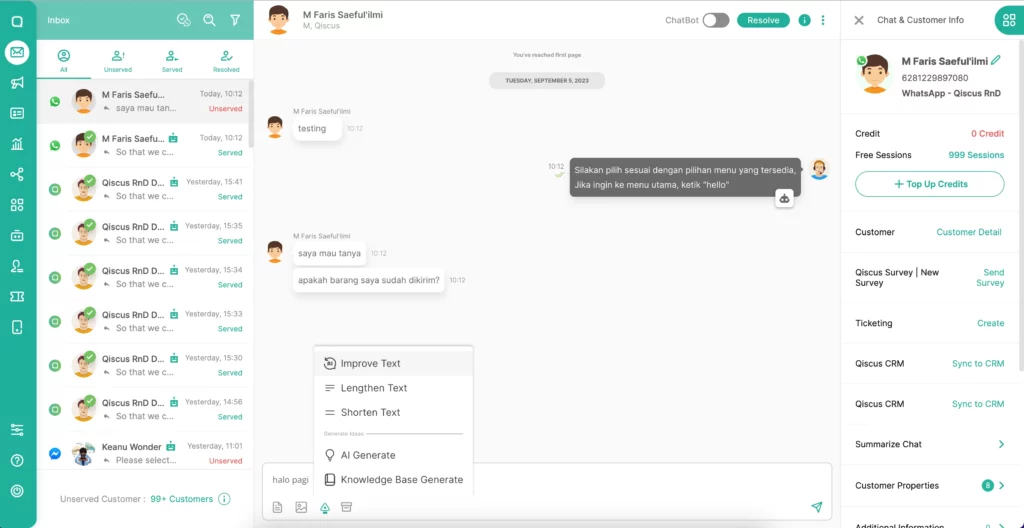
Qiscus Agent Copilot provides intelligent suggestions, recommended tone, and auto-drafted responses directly inside the chat interface. This helps agents respond calmly, politely, and professionally, reducing the risk of emotionally driven or unclear messages.
2. Use Data to Identify Etiquette Gaps
Most etiquette issues are not about attitude—they come from blind spots. Without data, you can’t see patterns such as slow replies, abrupt tone, or unclear explanations. Data identifies where etiquette breaks down and what needs improvement.
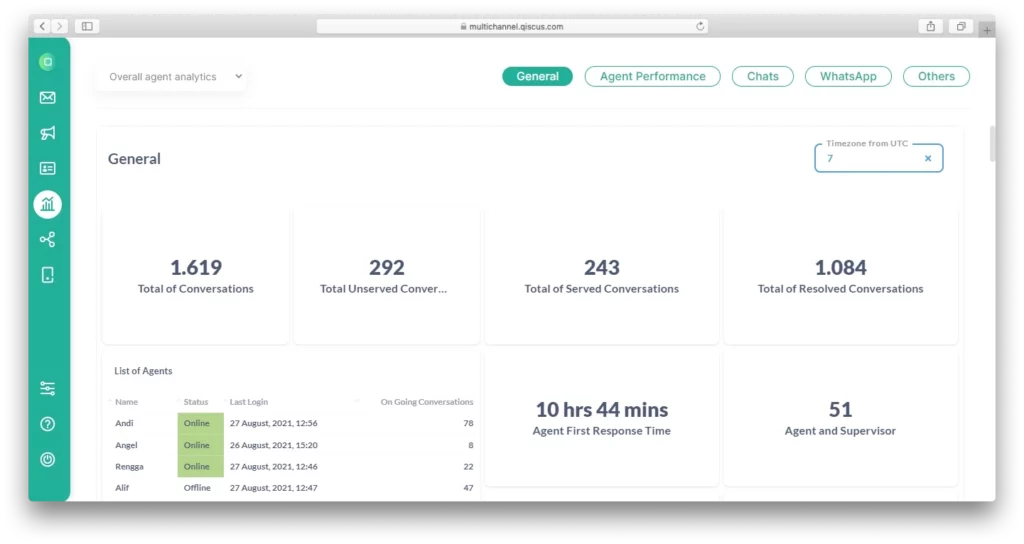
Qiscus Omnichannel Chat analytics provides data on response time, wait time, unresolved chats, sentiment trends, and agent performance. These insights show which etiquette behaviours need reinforcement, what channels are under stress, and where customers feel neglected.
3. Establish Omnichannel Consistency So Customers Don’t Repeat Themselves
Poor etiquette often happens when customers must restate their problem on every channel. This makes them frustrated before the conversation even begins—and pushes agents into defensive communication.
With Qiscus Omnichannel Chat, every message from every channel—WhatsApp Business API, Instagram DM, Facebook Messenger, website chat—flows into a single unified thread. Agents see full interaction history instantly, which enables them to greet customers personally (“Welcome back, Ms. Aisha”) and respond with context—an essential element of good etiquette.
4. Automate Routine Interactions So Agents Can Focus on Quality
When agents are overwhelmed with repetitive questions, etiquette tends to decline—they type faster, lose patience, or reply abruptly. Automation frees agents to focus on moments that require empathy, clarity, or problem-solving.
Qiscus AI Agent can automatically handle FAQs (opening hours, refund policy, order status, product details) across WhatsApp Business API, Instagram, Facebook Messenger, and web chat. By reducing repetitive load, agents have more mental bandwidth to deliver polite, composed, human-centred etiquette when it truly matters.
5. Use Feedback From Customers to Drive Improvements
Customer comments—whether praise or complaints—often highlight etiquette gaps your team may not recognize. Analyze feedback trends to understand recurring issues in tone, clarity, speed, or empathy. Use these insights to adjust training priorities and fine-tune your communication guidelines.
6. Recognize and Reward Good Etiquette Practices
Positive reinforcement helps shape long-term behaviour. Celebrate agents who consistently demonstrate great tone, empathy, or composure—public recognition encourages others to follow their example.
Rewards don’t always need to be monetary. A simple “Excellent job on how you handled this customer” can significantly boost morale and motivation.
7. Lead by Example
Customer service etiquette starts with leadership. Managers who communicate respectfully, provide clear guidance, and show empathy set the standard for the entire team. When leaders model the same etiquette expected from agents, it reinforces the culture and makes expectations feel authentic—not forced.
Strengthen Your Service, Win Customer Loyalty
Customer service etiquette is one of the strongest drivers of trust and loyalty in Southeast Asia. When your team communicates clearly, listens with empathy, and treats customers with respect, every interaction becomes an opportunity to build confidence in your brand.
With the right systems and tools—such as Qiscus Omnichannel Chat, Agent Copilot, Qiscus AI Agent, and WhatsApp Business API—your business can deliver faster, more consistent, and more human-centred service across every channel.
If you’re ready to elevate your customer experience and strengthen your brand reputation, contact Qiscus today and start transforming the way your team serves customers.