A WhatsApp call center is what a customer service team gets when it runs its support operation through WhatsApp with the same discipline a traditional call center runs on. That means real routing, a real queue, a tracked SLA, and a full CRM record behind every conversation. Without that structure, it’s just a shared inbox with a lot of unread messages.
The confusion around this term is understandable. WhatsApp itself doesn’t ship with a queue, a routing engine, or an SLA dashboard. Those come from the platform layered on top of it. That’s exactly why two businesses both “running WhatsApp support” can have completely different operational realities.
This guide covers what a real WhatsApp call center actually needs and the current state of voice calling on WhatsApp. It also walks through how to set one up without the common mistakes that turn a promising channel into a chaotic one.
What Is a WhatsApp Call Center?
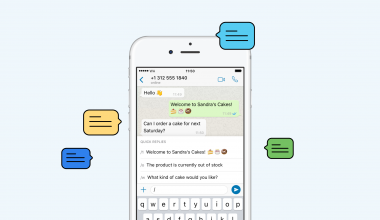
A WhatsApp call center is a customer support operation where WhatsApp is the primary channel, backed by the same operational infrastructure a traditional call center relies on. That includes a system to route an incoming conversation to the right team, and a queue when every agent is busy. It also means a tracked service level and a customer record that carries context across every interaction, so nothing gets lost between one conversation and the next.
The term itself is a bit of a holdover from a phone-first era. Most of what it describes today is text-based rather than voice-based. A customer messages instead of dials, an agent replies instead of picks up, and a queue holds a conversation instead of a caller. The operational discipline underneath, routing, queuing, SLA tracking, is identical to what a phone-based call center has always needed.
The Core Contact Center Features WhatsApp Needs
WhatsApp alone is a messaging channel. Turning it into a functioning call center means layering five specific capabilities on top of it.
1. Routing
An incoming message needs to reach the right team automatically, sales, support, or billing. That decision should be based on the customer’s intent, their message content, or their existing account status. Without automated routing, every conversation lands in one inbox and gets manually redirected. That adds delay and inconsistency to every single interaction.
2. Queuing
When every agent is occupied, an incoming conversation needs to hold in a visible, ordered queue. It shouldn’t disappear into an unassigned pile. A queue management system gives a manager visibility into how many customers are waiting and how long. That’s the data a team needs to staff correctly.
3. Agent Assignment
Once a conversation is routed and queued, it needs to land with a specific agent. That assignment should be based on availability, skill, or workload balance, not just whoever happens to be looking at the inbox first. A proper assignment system prevents one agent from getting overloaded while another sits idle.
4. SLA Tracking
A call center lives and dies by its service level agreement. First response time and resolution time matter, along with how consistently both get met. Without a tracked SLA, a team has no early warning when performance starts slipping. It also has no data to justify adding headcount when volume genuinely outgrows capacity. This is often the single most overlooked feature, since a team can feel busy without ever knowing whether it’s actually falling behind.
5. CRM Integration
An agent picking up a WhatsApp conversation needs the customer’s order history, past interaction, and account status visible immediately. That information shouldn’t be buried in a separate system they have to switch to mid-conversation. A unified customer data platform is what makes a WhatsApp conversation feel informed rather than generic.
Any one of these missing turns WhatsApp from a call center into a chat inbox with extra steps.
Here’s what each one is responsible for, side by side.
| Feature | What it prevents |
|---|---|
| Routing | A conversation landing with the wrong team |
| Queuing | A customer disappearing into an unassigned pile |
| Agent assignment | One agent overloaded while another sits idle |
| SLA tracking | Performance slipping with no early warning |
| CRM integration | An agent starting every conversation from zero context |
Voice Calling on WhatsApp, What’s Actually Available
For a while, “WhatsApp call center” was purely a text-based concept. The WhatsApp Business Platform’s API had no calling capability at all. That’s changed. Meta has introduced a WhatsApp Business Calling API that adds VoIP calling directly into the same thread a business already messages from. A customer can call and message the same number without switching to a separate app.
As of 2026, that capability is rolling out in phases. It’s accessible through Meta’s direct Cloud API partnerships and a limited number of enterprise providers, with broader availability across the wider provider ecosystem still expanding. If voice is a requirement for your specific operation, confirm the current state of access directly with your provider. Don’t assume it’s universally available yet, since this is a genuinely fast-moving part of the WhatsApp platform right now.
Qiscus supports WhatsApp Call as part of its channel coverage. That lets a customer reach a business by voice from the same WhatsApp thread used for chat. If full programmatic call routing into an IVR or a voice queue is a specific requirement for your operation, confirm the exact scope directly with the Qiscus team. This is an area of the platform still evolving alongside Meta’s own rollout.
How to Set Up a WhatsApp Call Center
Here’s the sequence that gets a WhatsApp-based support operation to a genuinely call-center-grade standard.
1. Map Your Routing Rules Before You Launch
Decide which conversation type goes where before the first message arrives. A billing question, a technical issue, and a sales inquiry each need a defined destination, not an ad hoc decision made by whoever answers first.
2. Set a Realistic SLA Based on Your Actual Volume
Pull your current message volume and staffing level. Then set a first response and resolution target your team can actually hit consistently. An SLA nobody meets is worse than no SLA, since it trains a team to ignore the metric entirely.
3. Connect Your CRM Before Go-Live, Not After
An agent working without customer context from day one develops bad habits that are hard to reverse later. Get the CRM integration live before the channel launches, not as a phase-two improvement. A team that starts with full context builds the habit of using it, while a team that starts without it often keeps working around the gap even after the integration finally arrives.
4. Build the Escalation Path for What Automation Can’t Resolve
Decide explicitly what a human agent needs to see when a conversation escalates from an automated flow. Make sure the full context transfers rather than dropping the customer into a queue with no history attached.
5. Monitor Queue Length and Wait Time From Week One
A queue that’s invisible to a manager is a queue that grows unnoticed until a customer complaint reveals it. Track wait time and queue depth from the very first week, not after volume becomes a visible problem.
Common Mistakes When Running a WhatsApp Call Center
A handful of patterns explain most of the gap. Some WhatsApp support channels work well, and others quietly frustrate customers. Most of these are easy to avoid once a team knows to watch for them in advance.
1. Treating WhatsApp as a Single Shared Inbox
A business that gives every agent access to one unsorted inbox recreates a familiar chaos. It’s the exact problem a real call center’s routing system was built to eliminate. Structure the inbox before scaling the team, not after.
2. Setting an SLA Without the Staffing to Support It
An ambitious response-time target that doesn’t match actual agent headcount sets a team up to fail before it starts. Model the staffing math against the SLA target, not the other way around.
3. Skipping CRM Integration to Launch Faster
A faster launch without customer context just moves the cost to every single conversation afterward. An agent has to ask for information the business should already have. The time saved at launch gets paid back many times over in a slower, more repetitive conversation.
4. Never Reviewing Routing Rules After Launch
A routing rule that made sense at launch drifts out of step as a product line changes or a team restructures. Review the routing logic quarterly, not just when a conversation starts landing in the wrong place often enough to notice.
Is a WhatsApp Call Center Right for Your Business?
Not every support operation needs the full structure described in this guide on day one. Here’s a rough sense of where the priority should sit depending on where you are.
| Your situation | What to prioritize first |
|---|---|
| Under 100 conversations a day, one small team | Basic routing and a shared inbox, formal SLA tracking can wait |
| Growing fast, multiple teams involved | Routing and queuing become urgent before agent count grows further |
| High volume, frequent escalations | SLA tracking and CRM integration matter as much as routing itself |
| Considering voice as a channel | Confirm current Calling API access with your provider before committing budget to it |
None of these override the five core features covered earlier. They just indicate which one is worth solving first, given where your operation actually is today.
Making the Business Case to Leadership
A CS manager proposing a structured WhatsApp call center usually has to justify the investment beyond “it will feel less chaotic.” These are the arguments that tend to land with leadership.
1. Headcount Efficiency, Not Just Headcount Growth
Proper routing and queuing let an existing team handle a higher volume without a proportional increase in staff. This is usually the strongest argument, since it ties directly to a cost leadership already tracks.
2. Reduced Escalation and Repeat Contact
When CRM integration gives an agent full context from the first message, a customer explains their issue once instead of repeating it across multiple contacts. Fewer repeat contacts mean fewer total conversations for the same customer base, which shows up directly in a lower cost-to-serve.
3. A Measurable SLA Leadership Can Track
An SLA dashboard gives leadership a number to watch instead of an anecdotal sense of whether support “feels” fast. That single change often does more to build confidence in a channel than any other part of the rollout.
How Qiscus Supports a WhatsApp Call Center
Qiscus brings routing, queuing, agent assignment, SLA tracking, and CRM integration together on one platform. It’s built around WhatsApp Business API, rather than requiring a business to stitch several separate tools together.
Conversation routing and queuing run through Qiscus Omnichannel Chat. It directs an incoming message to the right team automatically and holds it in a visible queue when every agent is occupied. SLA tracking and structured ticket management run through Qiscus Helpdesk. That gives a manager real visibility into first response time and resolution time rather than an estimate. The Qiscus Customer Data Platform unifies a customer’s history across every channel. An agent picking up a WhatsApp conversation sees the full context immediately.
For a CS manager evaluating whether WhatsApp can genuinely replace or supplement a traditional call center, that combination is usually the deciding factor. It’s one platform covering routing through CRM rather than five disconnected tools.
Build the Structure, Not Just the Inbox
A WhatsApp call center isn’t a feature you switch on. It’s routing, queuing, agent assignment, SLA tracking, and CRM integration working together on a channel your customer already prefers. None of these pieces work well in isolation, and skipping any one of them tends to surface as a specific, predictable problem down the line.
The business that gets this right doesn’t just move its support team onto WhatsApp. It builds the same operational discipline a phone-based call center always needed. That happens on a channel that happens to be where the customer already is.
Explore Qiscus’s customer engagement solutions and see what a properly structured WhatsApp call center could look like for your team.
Frequently Asked Questions About WhatsApp Call Centers
For most support volume, yes, provided the routing, queuing, and SLA infrastructure is in place. A traditional call center’s phone-based judgment calls, an emotionally difficult conversation or a case requiring extended real-time back and forth, may still be better served by an actual call, which is part of why WhatsApp’s newer calling capability is significant.
Not necessarily at a small scale, but the same principles apply. A small team with low volume can manage routing manually and still succeed. The moment volume grows past what one or two people can track in their heads, the lack of structured queuing and SLA tracking starts showing up as a slower, less consistent customer experience.
A chatbot automates a response to a specific query. A WhatsApp call center is the broader operational structure a support team runs on, whether or not any automation sits inside it. That includes routing, queuing, agent assignment, and SLA tracking. A chatbot can be one component of a WhatsApp call center, but it isn’t the whole thing on its own.
First response time and queue wait time are the earliest warning signs of a structural problem. A resolution time or a CSAT score matters too. Both tend to move slower and reveal a problem later than a queue that’s quietly growing week over week.
Not yet for most businesses. Meta’s WhatsApp Business Calling API is real and rolling out. Broad access across the provider ecosystem is still expanding as of 2026. A business considering voice as a requirement should confirm current access and scope directly with its provider rather than assuming full parity with a traditional phone system today.