WhatsApp Cloud API is Meta’s cloud-hosted version of the WhatsApp Business Platform. As of October 23, 2025, it is the only WhatsApp Business API available. The On-Premises API was sunset on that date. Any business that wants to use WhatsApp for customer communication at scale is now on Cloud API, whether they chose it explicitly or were migrated.
This guide covers what WhatsApp Cloud API is and how it compares to the On-Premises API that preceded it. Key features. How the July 2025 pricing update changed billing. And how to get access through a Business Solution Provider.
What Is WhatsApp Cloud API?
WhatsApp Cloud API is Meta’s cloud-hosted implementation of the WhatsApp Business Platform. It allows businesses to integrate WhatsApp messaging into their CRM, helpdesk, omnichannel platform, and other business systems via REST API and webhooks. Meta’s infrastructure hosts the entire backend. No private servers. No Docker containers. No manual upgrades.
The Cloud API was first introduced by Meta in May 2022 as an alternative to the self-hosted On-Premises API. Since then, it has become the default and, following the On-Premises sunset in October 2025, the only supported path for businesses using WhatsApp at scale.
The practical difference from the end user’s perspective is invisible. Customers still send and receive messages through standard WhatsApp. The difference is entirely on the infrastructure side. With the Cloud API, Meta’s servers process all message traffic. This gives businesses access to WhatsApp Business Platform features without the overhead of hosting, maintaining, and upgrading their own API infrastructure.
For a complete overview of WhatsApp Business API features and pricing, see our guide to what is WhatsApp Business API.
WhatsApp Cloud API vs On-Premises API
From 2018 until October 2025, Meta offered two ways to access the WhatsApp Business Platform. The Cloud API (launched 2022) and the On-Premises API (launched 2018). Both delivered the same core messaging capability. They differed in how the infrastructure was managed.
| Requirement | On-Premises API | Cloud API |
| Hosting | Private servers, Docker containers | Meta-hosted |
| Updates | Manual installation | Automatic deployment |
| Maintenance | Businesses manage patches, uptime, TLS certs | Zero hosting overhead |
| Throughput | ~250 msg/sec | Up to 1,000 msg/sec |
| Infrastructure cost | $400-1,200/month | No infrastructure cost |
| New feature access | Delayed weeks/months | First access |
The final supported version of the On-Premise API client expired on October 23, 2025. On-Premises API can no longer be used to send messages to WhatsApp users. The only supported path is now Cloud API on the WhatsApp Business Platform.
This means, if you were on On-Premises API and have already migrated: You are on Cloud API. Nothing changes operationally. Your BSP would have handled the migration.
And if you were on On-Premises API and have not migrated: Your API can no longer send or receive WhatsApp messages. Migration to Cloud API is required. Contact your BSP immediately.
If you are new to WhatsApp Business API: You will be set up on Cloud API by default. There is no On-Premises option for new registrations.
For businesses evaluating “Cloud API vs On-Premises”: This comparison is no longer a decision to make. Cloud API is the only path. The question is not which to choose, but how to implement Cloud API effectively for your specific use case.
Based on Meta’s documentation, some partners experienced a 90% reduction in infrastructure costs after migrating from On-Premises to Cloud API. The operational overhead of self-hosting produced costs that Meta’s cloud hosting eliminates.
For a detailed guide to setup and implementation, see our guide to WhatsApp Business API implementation.
Key Features of WhatsApp Cloud API
WhatsApp Cloud API is designed for businesses that need to manage customer conversations at scale. By combining Meta-hosted infrastructure with advanced messaging capabilities, it enables greater flexibility, automation, and integration than the WhatsApp Business App.
1. No Infrastructure Setup
Cloud API runs entirely on Meta’s servers. Businesses access it through REST API calls and configure webhooks to receive inbound messages. There is no server to provision, no database to maintain, and no deployment pipeline to manage. A developer can send the first test message within hours of starting the integration.
2. Unlimited Multi-Agent Access
Any number of agents can manage conversations on the same WhatsApp number simultaneously through the platform provided by the BSP. There is no device limit. No account sharing. Teams of any size access the shared inbox from one system.
3. Up to 1,000 Messages Per Second
Cloud API supports throughput of up to 1,000 messages per second, four times the capacity of the deprecated On-Premises API. This supports high-volume use cases including large broadcast campaigns, real-time transactional notifications, and peak-period customer service volumes.
4. Message Templates and Interactive Messages
All business-initiated messages sent outside the 24-hour service window require pre-approved message templates. Templates support dynamic personalisation variables, media attachments, and interactive buttons. Interactive message types include quick reply buttons, list messages, and WhatsApp Flows, which allow businesses to embed structured forms directly within the chat.
Based on existing research, businesses that use interactive message templates in their WhatsApp broadcast campaigns achieve higher response rates than plain text outreach. The Cloud API provides the full template and interactive message feature set.
5. Automatic Updates and New Features First
Meta deploys all new WhatsApp Business Platform features on Cloud API first. The On-Premises API received features weeks or months later. With the On-Premises API now sunset, Cloud API is the only way to access current and future WhatsApp Business Platform capabilities.
6. CRM and System Integration via Webhooks
Cloud API integrates with any external system that can send and receive HTTP requests. Inbound messages arrive at a configured webhook URL. Outbound messages are sent via REST API calls. This enables integration with CRM platforms, helpdesk systems, e-commerce backends, appointment scheduling tools, and any other business system without proprietary connectors.
7. Blue Tick Verification
Businesses using Cloud API through a verified BSP can apply for the Official Business Account badge. This is the blue verification checkmark that signals verified brand status to customers. The application goes through the BSP and involves a Meta review process. Not all businesses qualify automatically, but the option is available exclusively on the API, not on the WhatsApp Business App.
8. Advanced Analytics
Cloud API connected to a BSP platform tracks conversation-level metrics: first response time, resolution rate, agent performance, CSAT, and message delivery data. This level of reporting is not available on the WhatsApp Business App.
These features make WhatsApp Cloud API a strong choice for businesses with growing customer volumes, larger support teams, or more complex operational requirements. When paired with a trusted BSP like Qiscus, businesses can deploy, manage, and scale WhatsApp communications more efficiently.
How WhatsApp Cloud API Pricing Works
Understanding WhatsApp Cloud API pricing is essential before planning your customer communication strategy. Since Meta’s 2025 pricing update, businesses are charged based on individual messages rather than conversation sessions, making costs more closely tied to actual usage.
How per-message pricing works:
Charges now apply per message delivered, based on the message category and the recipient’s country. The four categories are:
| Category | Initiated by | When | Pricing |
| Marketing | Business | Outbound promotional campaigns, re-engagement | Paid per message |
| Utility | Business | Order confirmations, shipping updates, alerts | Paid per message |
| Authentication | Business | OTPs, security codes, verification messages | Paid per message |
| Service | Customer | Customer-initiated reply within 24-hour window | Free in most markets |
1. The 24-hour Service Window
When a customer sends your business a message, a 24-hour window opens during which your replies are free in most markets. This is the Service category. After 24 hours, any outbound message requires an approved template and standard per-message charges apply.
2. Click-to-WhatsApp Ad Window
When a customer initiates a conversation via a Click-to-WhatsApp ad, a 72-hour free messaging window opens instead of the standard 24 hours. All messages during that window are free, including marketing-intent messages.
3. BSP Fees
In addition to Meta’s per-message charges, your BSP typically charges a platform fee for the workspace, routing, analytics, and features built on top of the Cloud API. Contact Qiscus for specific pricing based on your message volume and market.
4. Rates Vary by Country
Meta publishes country-specific rates on the Meta for Developers pricing page. Markets in Southeast Asia, Europe, and North America have different rate structures. Verify current rates before finalising budget projections for outbound campaigns.
While Meta’s pricing is straightforward, your total cost also depends on your message mix, target markets, and BSP platform fees. Evaluating these factors helps ensure you choose a WhatsApp solution that aligns with both your operational needs and budget.
How to Get WhatsApp Cloud API Access
Access to WhatsApp Cloud API requires either direct integration through Meta’s API or, more commonly, access through an official Business Solution Provider (BSP). Most businesses use a BSP because the raw Cloud API delivers only the messaging layer, a BSP provides the agent workspace, routing, template management, analytics, and operational support on top of it.
1. Direct Integration via Meta
Businesses with developer resources can access Cloud API directly through Meta’s developer platform. This path requires the following.
- A verified Meta Business Manager account
- A Facebook Developer app with WhatsApp product enabled
- A dedicated phone number registered to the WhatsApp Business Account (WABA)
- Webhook configuration to receive inbound messages
- Approved message templates before sending outbound messages
- Developer capacity to build and maintain the platform layer (agent workspace, conversation routing, reporting)
Direct integration gives full control over the technical stack but requires significant ongoing engineering investment to build and maintain the operational platform that the raw API lacks.
2. Through an Official BSP (Recommended)
An official BSP like Qiscus handles Cloud API access, BSP activation, Meta Business Manager verification, number registration, template approval, and the platform layer as part of the service.
The typical activation process through a BSP:
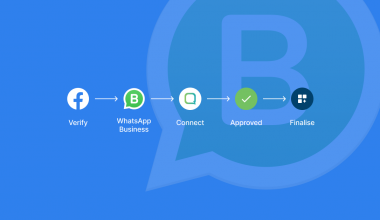
- Verify Meta Business Manager, legal business name, address, and website must match legal documents. Review takes 5 to 10 business days.
- Register your WhatsApp Business Account (WABA), your BSP handles this on your behalf.
- Connect a dedicated phone number, a number not currently registered on any WhatsApp account. Migration from WhatsApp Business App is possible but requires deleting the app account first.
- Submit and approve message templates, templates need Meta approval before first outbound send. Approval typically takes under 24 hours for compliant templates.
- Configure routing and automation, before going live, set routing rules, AI automation scope, and CRM integration.
Most businesses with a clean Meta Business Manager account go from application to first live conversation in two to three weeks through a BSP.
How Qiscus Delivers WhatsApp Cloud API
Qiscus is an agentic customer engagement platform and an official Meta WhatsApp Business Solution Provider. WhatsApp Cloud API access through Qiscus is native to the same platform as omnichannel inbox management, AI automation, helpdesk ticketing, and broadcast management.
The unified omnichannel workspace consolidates WhatsApp alongside Instagram DM, email, live chat, and 20+ additional channels into one agent dashboard. Every customer profile is unified across channels. Agents see the full interaction history from any channel before responding.
The AI automation layer handles tier-one WhatsApp queries autonomously, escalates to human agents with full conversation context, and surfaces knowledge base content during live interactions. The helpdesk and SLA management infrastructure runs SLA clocks on every conversation, fires pre-breach alerts, and generates weekly and monthly performance reports.
For broadcast campaigns, Qiscus manages the full workflow from contact segmentation and template submission through scheduled sends, delivery tracking, and inbound reply routing.
Paragon Technology increased traffic by up to 600% using WhatsApp Business API through Qiscus. That result requires the full infrastructure layer connecting Cloud API to automation, analytics, routing, and CRM.
Contact the Qiscus team to start your WhatsApp Cloud API activation and receive expert guidance through every step of the setup and configuration process.
Scale Customer Conversations with WhatsApp Cloud API
The “Cloud API vs On-Premises” comparison was a relevant decision for businesses from 2022 to 2024. It is no longer a decision. Cloud API is the standard. Every business using WhatsApp Business API is now on Cloud API.
Qiscus delivers WhatsApp Cloud API as a native part of a unified omnichannel platform, with the BSP activation, platform configuration, routing, AI automation, and reporting that converts Cloud API access into customer engagement infrastructure.
Explore how Qiscus supports WhatsApp Cloud API teams across omnichannel operations, AI automation, and helpdesk management.
Frequently Asked Questions
Yes. Since the On-Premises API sunset in October 2025, the WhatsApp Business API is the Cloud API. They are the same product. If someone refers to WhatsApp Business API today, they are referring to the Cloud API. The terminology is often used interchangeably. The important distinction is that the self-hosted On-Premises alternative no longer exists.
Access to the Cloud API itself is free. There are no subscription fees or setup charges from Meta for the API. However, businesses pay per message delivered based on message category and destination country, following Meta’s July 2025 per-message pricing update. BSPs also typically charge a platform fee for the agent workspace, routing, and features built on top of the API. The API is free to access. Using it to send messages has a cost.
Not technically. Meta allows direct integration through the developer platform. But the raw Cloud API provides only the messaging layer. Send a message. Receive a webhook. It has no agent workspace, no routing, no analytics, no conversation management. Most businesses use a BSP because the BSP provides all of those operational capabilities on top of the API. Building them independently requires significant engineering investment and ongoing maintenance. Most businesses use a BSP.
The On-Premises API was deprecated by Meta in October 2023 and fully sunset on October 23, 2025. As of that date, it can no longer be used to send or receive WhatsApp messages. Businesses that were on On-Premises API needed to migrate to Cloud API before that deadline. Cloud API is now the only supported path for WhatsApp Business Platform access.
WhatsApp Cloud API supports throughput of up to 1,000 messages per second, four times the capacity of the deprecated On-Premises API. This supports large broadcast campaigns, high-volume transactional notifications, and enterprise-scale customer service operations. The throughput limit is shared across all phone numbers in a Meta Business Manager account when multiple numbers are in use.