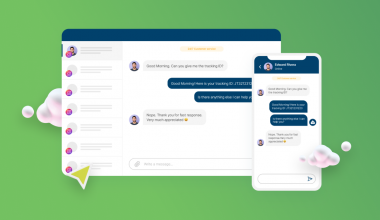
A WhatsApp team inbox is only as good as how it is managed day to day. Getting one set up is the easy part. Keeping it organized once ten agents, three shifts, and hundreds of daily conversations are running through it is where most teams struggle.
This guide is a practical, operational walkthrough of managing a WhatsApp shared inbox. It covers how to set one up and how to organize conversations with tags and views. Ownership and routing rules. Agent collaboration inside the inbox. And the daily habits that keep a growing team from descending into duplicate replies and missed messages.
For the broader case on why a shared inbox matters, see our guide to WhatsApp multi agent.
What a WhatsApp Team Inbox Actually Does
A WhatsApp shared inbox is a workspace where multiple agents read, assign, reply to, tag, and resolve conversations from one WhatsApp Business number. Every conversation is visible to the team. Each one has a clear owner, a status, and a history that any authorized agent can pick up.
A good team inbox answers four questions instantly for any conversation. Who owns this. How long has it been open. What is the current status. Has anyone already replied. Without those four answers readily visible, teams end up asking customers to repeat themselves, sending duplicate replies, and missing urgent messages.
This guide assumes the inbox itself, meaning WhatsApp Business API access connected to a platform, is already in place or being set up.
How to Set Up a WhatsApp Team Inbox
Setting up a WhatsApp team inbox requires more than connecting a phone number. The sequence below covers the practical steps in the order that avoids the most common setup mistakes.
1. Confirm WhatsApp Business API Access
A genuine team inbox requires the WhatsApp Business API, not the standard Business App. If this is not yet in place, see our guide to how to get WhatsApp Business API for the requirements and application steps.
2. Define Routing Rules Before Adding Agents
This is the step most teams skip, and it is the one that causes the most chaos later. Adding agents to an inbox without defined routing rules creates unassigned conversations and overlapping responses from the first message. Decide how conversations will be distributed, by keyword, by customer tag, by time of day, or by round robin, before anyone logs in.
3. Invite Team Members and Assign Roles
Add agents and supervisors to the platform. At minimum, separate access into two roles: agents who handle conversations, and admins who manage settings, add users, and oversee the full queue. Larger teams often add a third tier for team leads who supervise a subset of agents without full admin access.
4. Configure Tags and Conversation Categories
Set up the tagging taxonomy the whole team will use before conversations start arriving. Retrofitting tags onto months of untagged conversation history is far more work than defining them upfront.
5. Set Up Templates for Common Responses
Create pre-approved message templates for order confirmations, shipping updates, appointment reminders, and other frequent outbound messages. These need Meta approval before they can be used, so submit them early in the setup process rather than after go-live.
6. Run a Pilot Before Full Rollout
Bring in two or three agents first, test the routing rules and tags against real conversations, and fix gaps before adding the full team. A pilot surfaces configuration problems while the volume is still manageable.
Organizing the Inbox With Tags and Views
Tags are what keep a shared inbox navigable once conversation volume climbs into the hundreds. Without a consistent system, agents create their own ad hoc tags, and the inbox becomes unsearchable within weeks.
1. Build a Tagging Taxonomy
Define a fixed set of tags before launch. Common categories: reason for contact, sentiment or urgency, and current stage. Examples that work well in practice: sales inquiry, support request, refund pending, VIP, escalated, awaiting customer reply. Train every agent on which tag applies in which situation. A tagging system that different agents use inconsistently produces reporting that cannot be trusted.
2. Separate What Needs Attention From What Is Done
The inbox view should make it immediately obvious which conversations are waiting on a reply and which are resolved. Most platforms support saved views or filters. Unassigned, mine, escalated, waiting on customers. Agents and supervisors see the right slice of the queue without scrolling through everything.
3. Use the Conversation History as an Operational Tool
Every conversation’s full history, across every past interaction with that customer, is a resource for both agents and managers. Agents use it to avoid asking customers to repeat themselves. Supervisors use it to review interaction quality and coach agents on specific conversations rather than general impressions.
Assignment and Ownership Rules in Shared Inbox
Clear ownership is the single most important structural decision in a shared inbox. Without it, every other feature, tags, notes, templates, becomes cosmetic.
1. Every Conversation Needs an Owner
An unassigned conversation is an unanswered conversation waiting to happen. Configure automatic assignment on arrival, whether by round robin, by keyword-based routing, or by matching the customer to whichever agent handled them previously. Manual assignment should be the exception for edge cases, not the default mechanism.
2. Reassignment Should Be Deliberate, Not Silent
When a conversation moves from one agent to another, the reassignment should be visible and logged, ideally with a brief note on why. A conversation that quietly changes owners with no record leaves the new agent without context and makes it impossible to audit what happened later.
3. Escalation Paths Need to Be Explicit
Define in advance which conversation types escalate automatically, high-value customer flagged, sentiment detected as negative, response time approaching a threshold, and who receives that escalation. An escalation rule that exists only informally in someone’s head fails the first time that person is on leave. Based on existing research, first contact resolution improves directly when escalation paths are explicit rather than dependent on individual judgment.
How Collaboration Works Inside the Shared Inbox
The features that make a shared inbox genuinely collaborative, not just a bigger single-user inbox, are used constantly and invisibly to customers.
1. Internal Notes for Handoff Context
Agents should be able to leave notes on a conversation that only the team sees. A note explaining what was already tried or what the customer’s underlying concern actually is prevents the next agent from starting blind.
2. Tagging a Colleague for Input
A support agent needing a manager’s approval on a discount is a common example. Flagging a colleague directly keeps that discussion inside the same thread, not in a separate chat app the customer might glimpse.
3. Collision Detection to Prevent Duplicate Replies
A meaningful shared-inbox feature is an indicator showing when another agent is actively viewing or drafting a reply to the same conversation. Without this, two agents can send contradictory replies to the same customer within minutes of each other. This is one of the most visible and damaging failure modes a shared inbox is supposed to prevent.
Admin and Permission Management in Shared Inbox
Role-based access is what keeps a growing team’s shared inbox from becoming a security and accountability problem.
1. Separate Configuration Access From Daily Use
Admins manage settings, add and remove team members, configure routing and automation, and can see every conversation across the team. Agents handle their assigned conversations and typically cannot modify system-wide settings. This separation prevents accidental configuration changes and keeps a clear line of accountability for who can alter how the inbox behaves.
2. Review Access Periodically as the Team Changes
When an agent leaves the team, their access should be revoked immediately, and their open conversations should be reassigned rather than left orphaned. Periodic access reviews, quarterly for most teams, catch former employees or contractors who still technically have inbox access.
3. Keep an Audit Trail
Every message, assignment, and status change should be logged with a timestamp and the agent responsible. This is not just a compliance nicety. It is what allows a manager to reconstruct what happened on a specific conversation when a customer disputes what they were told. Based on existing research, customer service standards that are documented and auditable protect service quality during team turnover and disputes alike.
Daily Workflow Best Practices When You Use a Shared Inbox
Beyond the one-time setup, a handful of daily habits determine whether a shared inbox stays organized. Or slowly degrades into the same chaos it was meant to replace.
1. Start Each Shift With the Unassigned and Escalated Views
Before picking up new conversations, agents should check whether anything is sitting unassigned or flagged as escalated from the previous shift. This single habit catches most of the messages that would otherwise fall through shift handoffs.
2. Close the Loop on Resolved Conversations
A conversation should not sit in an ambiguous “probably done” state. Mark it resolved explicitly, or leave a note on why it is staying open. Based on existing research, customer service KPIs tracked at the right granularity depend on accurate status data. An inbox full of conversations no one has formally closed makes every downstream report unreliable.
3. Review Tag Usage Weekly
Spot-check whether agents are applying tags consistently. Tag drift, agents quietly using their own shorthand, happens gradually. It is easiest to correct early, not after months of inconsistent data accumulate.
4. Treat the Inbox as a Living System
Routing rules and tag taxonomies that made sense at 20 conversations a day may not fit at 200. Revisit the configuration periodically as volume and team size change, rather than assuming the initial setup will scale indefinitely on its own.
Common Mistakes That Break a Shared Inbox
Most shared inbox failures trace back to one of a small set of avoidable mistakes.
1. Adding Agents before defining routing rules
This is the single most common setup mistake. Without rules in place first, the inbox generates unassigned conversations and duplicate replies from day one. That then requires a painful mid-flight fix while live conversations are already happening.
2. No Tagging Standard
An inconsistently followed tagging system produces the same disorganization as no tags at all. Worse, it creates a false illusion of reliable reporting.
3. Treating Internal Notes as Optional
Teams that skip internal notes lose the handoff context that prevents customers from repeating themselves. This is one of the most customer-visible failures a shared inbox is supposed to eliminate. It happens quietly when notes are treated as optional rather than a habit.
4. Confusing a Bigger Queue with a Coordinated Team
Adding more agents without ownership, routing, and escalation rules just distributes the same chaos across more people. The coordination layer, not the headcount, is what makes an inbox scale.
How Qiscus Delivers a WhatsApp Team Inbox
Qiscus is an agentic customer engagement platform built to deliver a genuine shared team inbox rather than a shared login with no coordination layer.
The unified omnichannel workspace gives every agent a centralized view of assigned conversations. Supervisors see the full queue, including how long conversations have been open and where bottlenecks are forming. Routing rules configure based on keywords, customer tags, time of day, or previous agent assignment. The setup discipline this guide recommends is directly supported, not a workaround.
Internal notes, tagging, and full conversation history are native to every conversation, so handoffs between agents and shifts carry context automatically. Role-based access separates admin configuration from day-to-day agent use, and every assignment and status change is logged for later review.
The agentic AI customer service layer can also sit at the front of the inbox. Tier-one queries get handled or escalated to the right human agent with full context attached, reducing manual triage volume. Based on existing research, AI in customer service deployed at the intake layer reduces misrouting and frees human agents for conversations that need judgment.
ZAP improved chat efficiency by 50% using Qiscus AI alongside their human team. That result depends directly on AI and agents working from the same organized inbox, not separate, disconnected tools.
Turn Your WhatsApp Team Inbox into an Operational Advantage
A WhatsApp team inbox does not stay organized because the software has good features. It stays organized because a team defines routing rules before adding agents. Agrees on a tagging taxonomy before conversations pile up. Uses internal notes as a habit. And reviews the configuration as volume grows.
The platform provides the structure. The daily discipline is what makes that structure actually work. Teams that treat the inbox as a living system they maintain consistently outperform teams that set it up once and never revisit it. This holds regardless of platform.
Qiscus provides the routing, tagging, collaboration, and reporting infrastructure this guide describes. Built to support the habits that keep a growing team’s conversations organized, not chaotic.
Explore how Qiscus supports WhatsApp team inbox management for teams scaling from a handful of agents to hundreds.
Frequently Asked Questions
The questions below cover what teams ask most often when setting up or managing a WhatsApp team inbox.
The terms are generally used interchangeably. Both describe a workspace where multiple agents manage conversations from one WhatsApp Business number with assignment, tagging, and collaboration features. Some platforms use team inbox to emphasize collaboration and shared inbox to emphasize single-number access. The underlying capability is the same.
There is no cap from WhatsApp itself. The practical limit depends on the platform tier a business is on. Teams of five to fifteen agents are common on standard plans, and teams of fifty or more agents run on enterprise-tier configurations. The organizing structure, routing rules, tags, and role separation, matters more to usability at scale than the raw agent count.
Yes, strongly recommended. Retrofitting a tagging taxonomy onto months of untagged conversation history is significantly more work than defining it upfront. A team that launches without a tagging plan typically ends up with inconsistent, agent-invented tags that make reporting unreliable within weeks.
In a properly configured team inbox, conversation history belongs to the customer record and the shared inbox, not to an individual agent’s login. When an agent leaves, their past conversations, including internal notes, remain fully visible to the team. Their open conversations should be reassigned as part of offboarding.
Yes, and this is standard in a well-configured setup. AI typically handles the first response and tier-one queries, tagging or resolving straightforward requests automatically. It escalates to a human agent with full context when judgment is needed. The AI’s activity should be visible in the same inbox and subject to the same tagging as human agent activity. Not managed as a separate system.