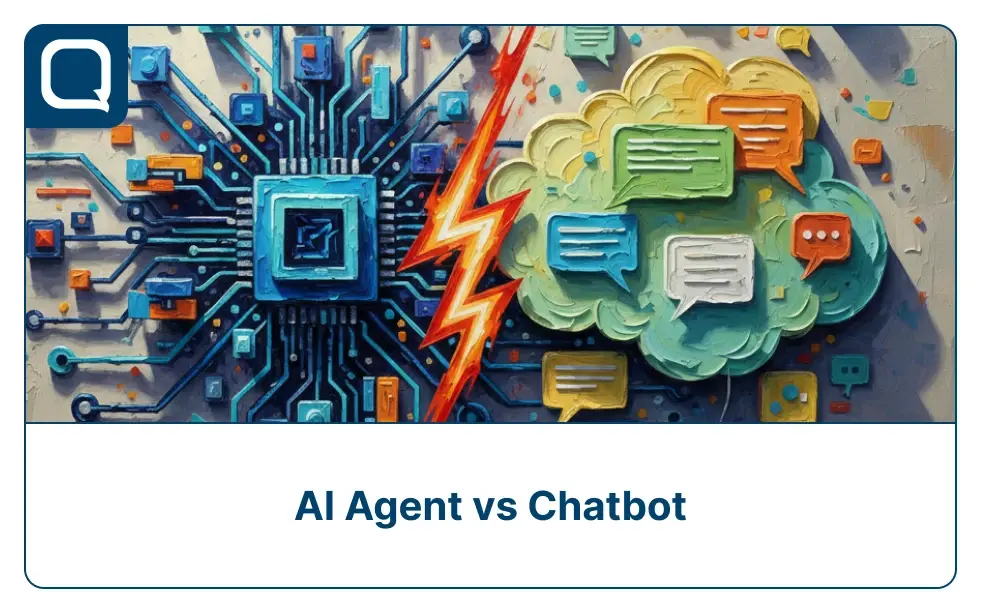
When discussing the difference between AI agents and chatbots, one key question often arises among business leaders: which solution should your company use?
In 2025, the comparison between AI agent vs chatbot is no longer theoretical. Enterprises across the US and Southeast Asia—including Malaysia (MY), the Philippines (PH), and Singapore (SG)—are actively choosing between reactive chatbots and goal-oriented AI agents to support customer service, sales operations, and marketing workflows.
This article provides a practical, business-oriented breakdown of the difference between AI agents and chatbots, helping decision makers choose the right solution for modern customer engagement, complaint handling, and scalable automation.
What Is an AI Agent?
An AI agent represents the next evolution of conversational and operational automation. Unlike rule-based chatbots, AI agents are designed to understand context, reason through problems, and take autonomous actions aligned with business goals.
From an enterprise perspective in 2025, AI agents are no longer simple conversational tools. They function as digital workers that collaborate with human teams.
Key AI agent capabilities include:
1. AI Agents Understand Conversational Context
AI agents are built to understand conversational context instead of relying only on keywords. They can accurately interpret customer intent, sentiment, and urgency throughout an interaction.
This capability is especially valuable for handling customer complaints and escalation scenarios, where tone, emotion, and timing matter. By using structured reply to customer complaint templates that adapt in real time, AI agents help businesses deliver more accurate and empathetic responses.
2. AI Agents Continuously Learn From Customer Interactions and CRM Data
AI agents continuously improve response quality by learning from historical conversations, CRM records, and internal knowledge bases.
Unlike rule-based chatbots that require frequent manual updates, AI agents evolve automatically as they process more data. This allows businesses to maintain consistent, high-quality customer service without increasing operational complexity.
3. AI Agents Recommend Next-Best Actions for Faster Resolution
Beyond answering questions, AI agents support operational decision-making by recommending next-best actions.
Based on past complaint resolution patterns, AI agents can suggest refunds, compensation, or escalation paths that align with company policies. This helps customer service teams resolve issues faster while reducing human error and inconsistency.
4. AI Agents Work Alongside Human Agents
In enterprise customer service operations across the US, Singapore, and the Philippines, AI agents provide real-time insights, complaint summaries, and suggested professional responses. This collaboration improves response time, ensures message consistency, and supports scalable customer service operations.
For executives and customer experience leaders, AI agents are strategic partners. In real deployments, businesses report 30–40% reductions in operational workload, while improving CSAT and complaint resolution speed. This makes AI agents highly relevant for organizations balancing efficiency with personalization at scale.
What Is a Chatbot?
A chatbot is an automated conversational program that operates based on predefined rules, decision trees, or scripted flows. Its role in customer service is primarily reactive, responding to specific inputs with predefined answers rather than interpreting deeper intent or context.
In enterprise customer service environments, chatbots are commonly used to:
1. Answer Frequently Asked Questions (FAQ)
Chatbots efficiently handle repetitive questions such as pricing details, operating hours, refund policies, or account setup instructions. By providing instant answers, they reduce the volume of basic inquiries handled by human agents.
2. Provide Basic Product or Service Information
Chatbots deliver standardized information about products, services, or promotions. Because responses are scripted, the information remains consistent across channels, helping businesses maintain messaging accuracy.
3. Route Customers to the Right Department or Agent
When a request cannot be resolved automatically, chatbots collect initial information and route the conversation to the appropriate team or human agent. This shortens handling time and improves internal efficiency.
4. Support High-Volume Channels at Scale
In markets such as Malaysia and the Philippines, chatbots are widely used on WhatsApp, live chat, and social media to manage large volumes of operational inquiries, including order status, delivery timelines, and store availability.
5. Act as the First Layer of Customer Interaction
Chatbots often serve as the initial touchpoint in customer service. They filter inquiries, resolve simple issues, and escalate more complex complaints to human agents when necessary.
For example, many companies in Malaysia and Philippines use chatbots on WhatsApp, live chat, or social media to answer operational questions such as store hours, order status, or delivery timelines.
However, chatbots have clear limitations. When a customer submits a complaint that falls outside predefined flows or requires empathy, investigation, or contextual reasoning, the chatbot often produces rigid or irrelevant responses. This can negatively affect customer experience if not supported by human intervention or AI agents.
For decision makers, chatbots remain relevant as entry-level automation, but they are insufficient for complex workflows such as professional complaint handling, escalation management, or personalized customer recovery strategies.
Key Differences Between AI Agents and Chatbots in Business Use
Although both technologies support automated conversations, the difference between AI agents and chatbots lies in how they think, learn, and contribute to measurable business outcomes. Based on real enterprise adoption in 2025, the distinction is increasingly clear.
| Aspect | Chatbots | AI Agents |
| Decision Logic | Rule-based or keyword matching | NLP, machine learning, and reasoning-based |
| Understanding Customer Intent | Limited to predefined flows | Understands full conversational context, intent, and sentiment |
| Learning Capability | Static unless manually updated | Continuously learns from interactions and outcomes |
| Task Complexity | Simple tasks such as FAQ and basic complaint acknowledgment | Complex, multi-step workflows: investigation, resolution, and follow-up |
| Complaint Handling | Sends basic replies or routes to agents | Uses structured customer complaint response templates with adaptive responses |
| Human Agent Collaboration | Primarily acts as a routing layer | Actively supports agents with suggested replies, insights, and next actions |
| Escalation & SLA Management | Manual or rule-triggered | Intelligent escalation logic with SLA tracking |
| Business Value | Reduces cost-to-serve at entry level | Improves operational efficiency and customer experience (CX) at scale |
| Best Use Case | Early-stage automation and high-volume simple inquiries | Enterprise customer service, sales ops, and workflow automation |
In short: chatbots are effective for basic automation, while AI agents deliver higher strategic value by combining efficiency, personalization, and decision support across the customer journey.
AI Agent Use Cases in SEA (Malaysia, Singapore and Philippines)
By 2025, AI agents are no longer limited to pilots or innovation labs. They are actively used by global and regional enterprises to manage customer complaints, support omnichannel operations, and assist human teams with decision-making.
1. Grab (Singapore, Southeast Asia)
Grab uses AI-powered agents to manage customer complaints related to ride cancellations, food delivery delays, and payment issues. AI agents automatically acknowledge complaints across in-app chat and messaging channels, gather required details, and resolve routine cases. Complex disputes are escalated to human support teams with structured case summaries and recommended response actions.
2. Gojek (Indonesia & Southeast Asia)
Gojek deploys AI agents to handle large volumes of service complaints across its super-app ecosystem. AI agents classify complaint types, apply standardized response templates, and assist human agents with investigation and resolution steps. This allows Gojek to maintain consistent service quality across multiple markets and languages.
3. DBS Bank (Singapore)
DBS Bank uses AI agents to support customer service operations, including inquiry handling and complaint management. AI agents assist with intent detection, response recommendations, and routing, while human agents manage high-risk or emotionally sensitive cases. This model aligns with DBS’s focus on digital excellence and customer-centric banking.
Key Pattern Across These Companies
Across the US and Southeast Asia, the operational model is consistent:
- AI agents handle acknowledgment, context gathering, classification, and structured responses
- Human agents handle judgment-driven decisions, empathy, and exception cases
- Systems integrate CRM, transaction data, and messaging platforms end-to-end
This is why, in 2025, enterprises increasingly rely on AI agents to manage customer complaints, support omnichannel workflows, and deliver professional, scalable customer experiences.
AI Agent vs Chatbot: Which Should Your Business Choose?
Choosing between an AI agent and a chatbot is not about which technology is more advanced, it is about which aligns with your business goals and operational reality in 2025.
Below are five practical considerations based on real business adoption.
1. Service Scale and Complexity
If most customer interactions involve simple inquiries such as FAQs, order status, or basic complaints, a chatbot is often sufficient. Many businesses using WhatsApp Business API rely on chatbots to provide instant responses and route cases efficiently.
However, when customers expect contextual, personalized, and professional complaint handling, AI agents become essential. Platforms like Qiscus AgentLabs enable AI agents to understand conversation history, sentiment, and urgency, delivering responses that go beyond scripted flows.
2. Business Focus
Chatbots are ideal for companies prioritizing short-term cost reduction. They reduce agent workload at the entry level.
AI agents, on the other hand, support businesses aiming to differentiate through superior customer experience. In competitive markets such as SG and the US, AI agents help build long-term customer trust and loyalty.
3. Integration with Customer Service Teams
Chatbots act mainly as filters. AI agents function as intelligent assistants working alongside human agents.
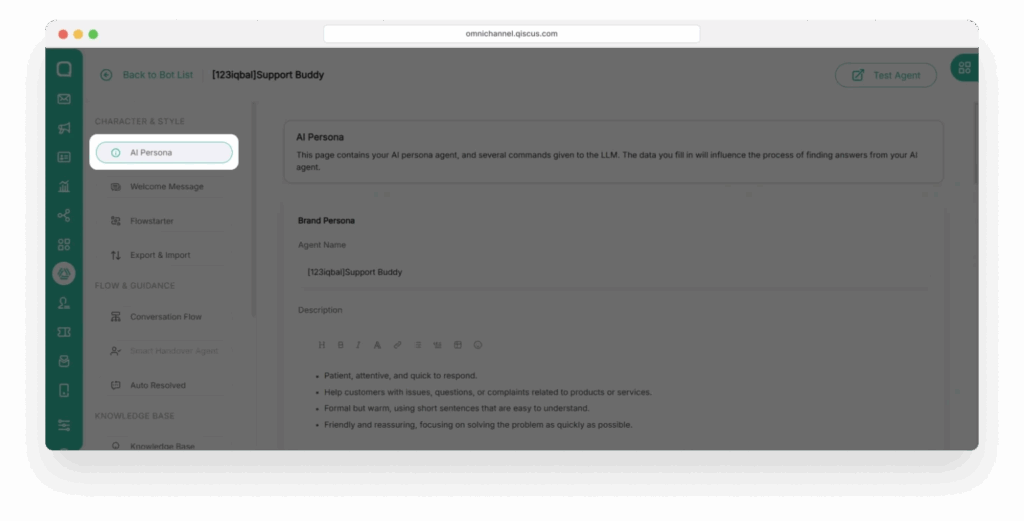
With Qiscus AgentLabs, AI agents provide recommended complaint replies, conversation analytics, and emotion detection. This ensures professional, empathy-first responses aligned with enterprise reply to customer complaint templates, while maintaining consistency across teams.
4. Scalability and Learning
Chatbots are static by nature, their responses remain unchanged unless manually updated.
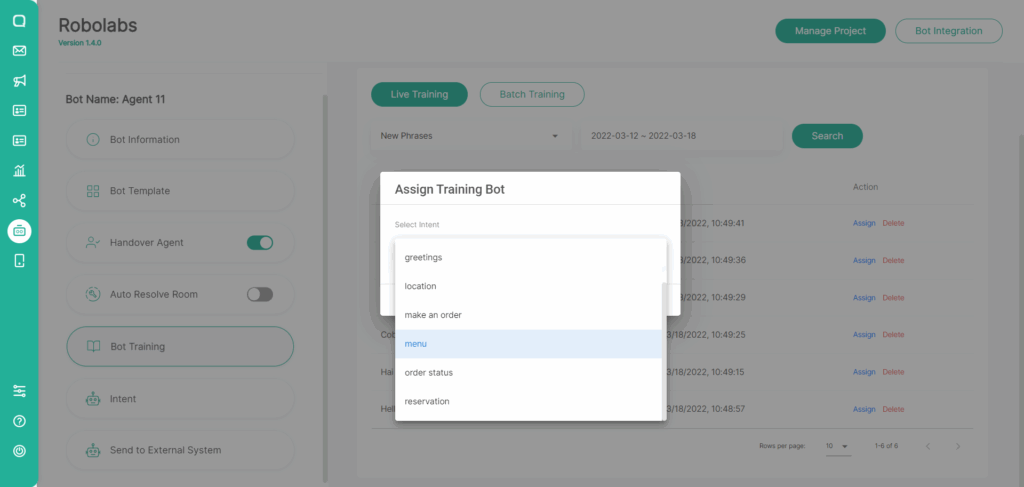
AI agents are dynamic. As they process more conversations, complaint cases, and resolutions, they continuously improve. Using AI training features within Qiscus AgentLabs, businesses can refine knowledge bases, analyze customer behavior, and enhance response quality over time.
5. Long-Term Business Impact
Chatbots are often a short-term automation investment.
AI agents represent a long-term strategic investment that supports full digital transformation. Combined with Qiscus AgentLabs and WhatsApp Business API, businesses can deliver fast, consistent, and personalized customer interactions across email, live chat, social media, and messaging channels.
In summary, chatbots are suitable for early-stage digitalization and simple automation. AI agents are the right choice for organizations seeking sustainable competitive advantage through customer experience excellence.
Choosing the Right Automation Strategy with Qiscus
The difference between AI agents and chatbots lies in depth of understanding, adaptability, and strategic impact.
Chatbots remain effective for handling simple inquiries and basic complaint acknowledgment in the short term. However, when businesses aim to deliver personalized, context-aware, and professional customer interactions, AI agents become indispensable.
In 2025, enterprises across the US, Malaysia, the Philippines, and Singapore increasingly adopt AI agents to manage complex workflows, support human teams, and ensure consistent, empathy-first responses using structured complaint response templates.
Contact Qiscus today to learn how AI agents can transform your customer service operations and give your business a sustainable competitive edge.