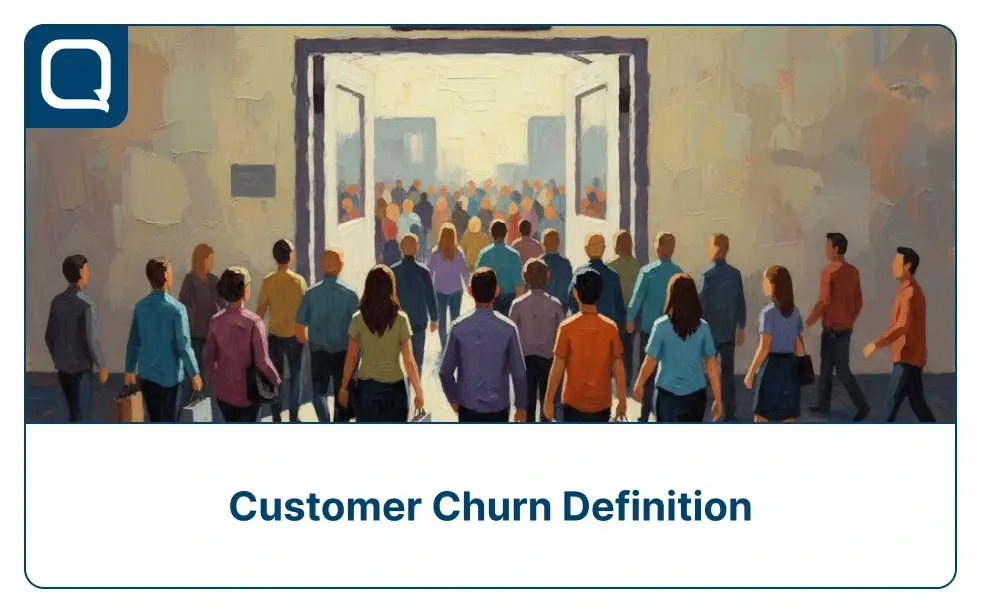
Losing customers is one of the biggest challenges that customer service teams need to address quickly. When customers leave, the impact reaches far beyond declining revenue, the business must also spend more to attract replacements. This is why understanding and managing your churn rate is essential for long-term business sustainability.
This article breaks down the customer churn definition, how to calculate churn rate, and effective ways to reduce it.
Customer Churn Definition
Customer churn rate refers to the number or percentage of existing customers who stop buying your products or decide not to continue their subscription. Whether you run an e-commerce brand, streaming service, or SaaS business, all companies experience churn, especially when dealing with recurring purchases or subscriptions.
Churn rate is not limited to reduced transactions, it also applies when users cancel subscriptions, downgrade plans, or stop engaging with your service. The higher the percentage, the more your customer service and retention strategies need improvement.
This metric is one of the most crucial customer service KPIs. A high churn rate signals deeper issues across the business, from product relevance to customer service performance and overall customer satisfaction.
Why Monitoring Customer Churn Rate Is Important
Understanding your customer churn rate helps you uncover the real reasons why customers leave. It affects not only revenue but also long-term loyalty from your broader customer base.
Here are some key benefits of monitoring churn:
1. Improves Customer Retention
A low churn rate correlates with strong customer retention. When your business retains customers consistently, it shows you are building long-term trust and meaningful relationships. Repeat customers also contribute significantly to long-term revenue.
2. Optimizes Marketing Budget
A lower churn rate means you don’t need to spend aggressively to replace lost customers. For example, if churn is low, you may only need to allocate 30% of your marketing budget to acquisition efforts. But when churn is high, you may have to spend nearly your entire marketing budget on acquiring new customers just to maintain growth.
3. Guides Product Development
Customers don’t leave only because of poor service, product quality also plays a major role. Churn analysis helps you identify what features or offerings need improvement. Periodic surveys, customer feedback, and product testing can help refine your product to better match customer needs.
4. Indicates Customer Satisfaction
A high churn rate often suggests customers are not satisfied with your product or service. Use metrics like the Customer Satisfaction Score (CSAT) to measure satisfaction and uncover the root issues affecting the customer experience.
Monitoring churn is about understanding the overall health of your customer experience. By keeping a close eye on churn and addressing the factors behind it, your business can make smarter decisions, strengthen loyalty, and build a more sustainable path to long-term growth.
How to Calculate Customer Churn Rate
There are several ways to calculate churn depending on your business goals, whether you want an overall churn figure, revenue churn, or seasonal churn insights.
1. Calculating Overall Customer Churn Rate
This method measures customer loss within a specific period.
For example:
If you start January with 500 customers and end the month with 400, your churn rate is 20%.
Formula:
Customer Churn Rate = (A / B) × 100%
A = Number of customers lost
B = Total customers at the beginning of the period
2. Calculating Gross Revenue Churn Rate
Not all customers contribute the same revenue. This calculation helps measure total revenue lost due to churn.
For example:
If your monthly recurring revenue (MRR) is Rp 500 million and you lose Rp 100 million in the same month, your gross revenue churn rate is 20%.
Formula:
Gross Revenue Churn Rate = (D / E) × 100%
D = Total revenue lost
E = Total revenue for the period
3. Calculating Seasonal Churn Rate
Seasonal trends like Ramadan, Christmas, or long holidays can affect churn. Seasonal churn analysis helps prepare better customer service and marketing strategies for peak or low seasons.
For example:
During Ramadan, you have 1000 customers with a 10% churn rate.
On regular months, you have 400 customers with a 20% churn rate.
Your seasonal churn rate equals 12.8%.
Formula:
Seasonal Churn Rate = {[(G × H) + (I × J)] / (G + I)} × 100%
Understanding how to calculate churn in different ways gives your team clearer visibility into what’s really happening behind customer losses. Whether you’re tracking overall churn, revenue impact, or seasonal fluctuations, these calculations help you make more informed decisions and respond with the right strategies. With a solid grasp of churn metrics, your business can better predict trends, protect revenue, and strengthen customer relationships over time.
Benchmarking Your Customer Churn Rate
An important part of understanding the customer churn definition is knowing whether your churn rate is within a healthy range or signaling deeper operational issues. Benchmarking gives you a clear point of comparison, helping you see whether your churn is influenced by industry norms, internal performance gaps, or customer behavior patterns.
Here are several effective ways to benchmark your churn rate:
1. Compare with Industry Standards
Every industry has natural churn variations. For instance, B2B SaaS companies typically maintain lower churn due to long-term contracts, while industries like e-commerce or consumer apps may experience higher fluctuations. By comparing your churn rate with these benchmarks, you can determine whether your churn is acceptable or needs closer attention.
2. Analyze Cohort-Based Churn
Cohort analysis groups customers based on when they joined, allowing you to observe churn trends over time. This approach helps you understand whether issues arise early in the lifecycle—often pointing to onboarding or product adoption problems or develop later due to unmet expectations. It provides a more precise view than looking at overall churn alone.
3. Compare Churn Across Customer Segments
Not all customers behave the same. Premium users, frequent buyers, and casual shoppers may show significantly different churn patterns. Segment-based benchmarking helps you identify which groups are at higher risk and where interventions, such as targeted offers, improved service, or better support, are most needed.
By benchmarking churn using these methods, your team gains clarity on whether your current rate is normal or a sign of deeper challenges. With the right comparisons, you can pinpoint where improvements should begin and make decisions that strengthen retention in a sustainable, data-driven way.
Early Warning Signs of Customer Churn
Understanding the customer churn definition goes beyond calculating how many customers leave, it also involves recognizing the signals that indicate churn is about to happen. Detecting these signs early allows your team to intervene before customers make the decision to walk away.
Some of the most common early indicators include:
1. Decreased Purchase Frequency
A noticeable decline in purchases often indicates reduced interest. Customers may no longer feel the product delivers enough value. This trend is an early signal that they may be considering other options.
2. Slow Responses to Campaigns Messages
When customers stop replying or engaging with your messages, their attention is fading. It may suggest the content no longer feels relevant or appealing. Over time, this disengagement can lead to churn.
3. A Sudden Increase in Complaints
A spike in complaints usually reflects growing dissatisfaction. Customers may be experiencing recurring issues that disrupt their experience. If these problems continue, the likelihood of churn rises significantly.
4. Significant drop in Account Activity
Reduced logins or fewer interactions are clear signs of declining interest. Customers may be shifting their attention to other brands or solutions. If not addressed early, this behavior often results in churn.
By keeping a close eye on these behavioral patterns, your team can take early, proactive measures, whether through personal follow-ups, tailored recommendations, or more relevant product offerings. These timely actions not only prevent churn but also help rebuild trust and strengthen long-term customer relationships.
How to Reduce Customer Churn Rate
Reducing churn requires a deep understanding of your customers, beyond demographics. Here are several strategies to help lower churn:
1. Identify At-Risk Customers
At-risk customers often show signs such as decreased purchasing frequency, reduced interaction, or subtle complaints. If ignored, they can churn easily, especially if they are part of a high-value customer segment.
Using tools like Qiscus CDP, you can analyze chat history and customer behavior to predict churn risks early. Proactive steps such as sending personalized offers or reaching out directly can help turn risk into opportunity.
2. Build a Customer Loyalty Program
Many loyal customers feel unappreciated once they make repeat purchases. When loyalty goes unnoticed, the chance of switching to competitors increases.
A well-designed loyalty program helps customers feel valued. Offer reward points, exclusive discounts, or early access to new products.
With Qiscus WhatsApp Broadcast, you can send loyalty program offers safely and consistently without worrying about account suspension. The verified green tick adds credibility and builds trust.
3. Personalize Customer Experiences
Generic messages and irrelevant offers make customers feel unseen. Personalization is essential for improving customer satisfaction and retention.
Use customer data to analyze preferences, purchase history, and behavior patterns. This helps you deliver relevant recommendations and maintain meaningful relationships.
4. Strengthen Customer-Centric Values
Businesses often fail when customers feel like just another number. Adopting a customer-centric approach ensures decisions are made based on customer needs.
Tools like Qiscus Survey help you gather insights directly from customers and turn them into strategic improvements for your service or product.
5. Prioritize High-value Customers
Losing priority customers can cause significant financial and reputational damage. Provide special benefits such as premium service, personal assistance, or exclusive product previews to reinforce their loyalty.
6. Use the Right Customer Service Solutions
Slow or inconsistent service is one of the main reasons customers leave. They expect quick, seamless, and helpful responses every time.
With Qiscus Omnichannel Chat integrated with AI agent, your team can provide fast, integrated customer service across multiple platforms. Features like WhatsApp Business API integration, and efficient ticket management ensure that every customer receives timely attention.
Reducing churn is ultimately about staying connected to what customers need and responding with the right actions at the right time. By combining strong customer insight with supportive technology like Qiscus, your business can create experiences that feel more personal, reliable, and consistent. With the right strategies in place, you not only prevent customer loss, you build loyalty that lasts.
Reduce Customer Churn Rate Starting Today
Don’t let churn hinder your business growth. By identifying at-risk customers, building loyalty programs, and creating personalized experiences, you can strengthen long-term customer relationships.
Use Qiscus Omnichannel Chat to deliver responsive, integrated, and data-driven customer service. Start building a more stable and sustainable business, contact Qiscus today!