Choosing the best tools for medical reminders on WhatsApp vs SMS has become a capacity decision, not a messaging detail. Every empty appointment slot is a doctor’s hour your hospital already paid for. Every missed vaccination or skipped screening recall is a patient who drifts out of care. Yet many healthcare teams still send reminders through whichever channel the old system happened to support.
The channel you pick shapes what patients can do with a reminder. A plain text tells them where to be. A WhatsApp message can let them confirm, reschedule, or ask a question in the same thread. This guide compares the two channels side by side, shows where SMS still earns its place, and explains how a WhatsApp-first setup with SMS fallback works in practice. It closes with the criteria that separate a reliable reminder tool from one that only sends messages.
Why Do Medical Reminders Need a Channel Strategy?
Medical reminders need a channel strategy because each reminder type has a different job, urgency, and audience. An appointment confirmation needs a reply. A lab-ready notice needs trust. A vaccination recall needs reach across every age group. A single channel rarely serves all of these well, so healthcare leaders should match the channel to the job.
1. Missed Appointments Waste Clinical Capacity
A no-show does not just cost one consultation fee. It leaves a clinician idle, pushes other patients further down the waitlist, and often delays a diagnosis. Reminders are one of the cheapest levers a hospital has against this loss. The channel decides whether the patient actually sees the reminder in time to act on it.
2. Reminder Types Carry Different Levels of Urgency
A screening recall can wait a day. A reminder to fast before tomorrow’s procedure cannot. Urgent, time-bound messages need the most dependable delivery path. Routine messages can favour richer, more interactive formats that patients enjoy using.
3. Patients Expect a Way to Reply
Patients rarely just read a reminder and comply. They want to move the slot, ask about parking, or check whether a family member can attend instead. A reminder channel without a reply path pushes those questions to your call centre. That shifts the cost rather than removing it.
Which Medical Reminders Should Healthcare Teams Automate?
Healthcare teams should automate any reminder that follows a predictable trigger and does not require clinical judgement to write. That covers appointments, medication schedules, vaccinations, screening recalls, and lab-ready notices. Each one has a clear event, a standard message, and a measurable outcome. Automating them frees staff for conversations that genuinely need a human.
1. Appointment Reminders and Confirmations
Appointment reminders are the highest-volume use case in most hospitals and clinics. They work best with a confirm or reschedule option, because that turns a one-way notice into a live update to your schedule.
2. Medication Reminders
Medication reminders support adherence for chronic conditions and post-discharge care. Keep these messages discreet. Refer to “your evening medication” rather than naming the drug or condition, since a lock-screen preview can be visible to others.
3. Vaccination Schedules
Vaccination reminders follow a fixed calendar, such as childhood immunisation series or seasonal flu campaigns. Parents and caregivers are often the real recipients. A channel that supports a quick booking reply reduces the gap between reminder and appointment.
4. Screening Recalls
Screening recalls reach patients who are due for checks like mammograms, cervical screening, or diabetic eye exams. These patients feel healthy, so the message has to earn attention. Richer formats and a direct booking path tend to help here.
5. Lab-Ready Notices
A lab-ready notice tells the patient their results are available, not what the results are. The message should point to a secure portal or a follow-up appointment. This keeps sensitive values out of a chat thread while still saving the patient a phone call.
WhatsApp vs SMS Reminders Compared Head to Head
WhatsApp vs SMS reminders differ most in interactivity, delivery visibility, and sender trust. SMS reaches nearly any mobile phone without data or an app. WhatsApp adds rich content, two-way replies, read signals, and a verified business identity. The table below compares both channels across the factors that matter for medical reminders.
| Factor | SMS reminders | WhatsApp reminders |
|---|---|---|
| Reach | Any mobile phone with network signal | Patients with WhatsApp installed and a data connection |
| Rich content | Plain text, character-limited segments | Text, images, documents, location, buttons, and forms |
| Two-way replies | Possible but often limited to keywords | Full conversation in the same thread |
| Delivery and read signals | Delivery reports depend on the carrier and provider | Sent, delivered, and read statuses reported by the platform |
| Cost model | Priced per message segment by the SMS provider | Priced per delivered template message by category and country |
| Sender trust | Sender ID rules vary by country, spoofing is a known risk | Business display name with blue tick eligibility |
| Fallback role | Strong as a universal backup channel | Strong as the primary, interactive channel |
1. Reach and Device Coverage
SMS works on basic phones, older handsets, and devices without mobile data. That makes it the widest net for any population. WhatsApp reach depends on how many of your patients use the app, which varies sharply by country and age group. Check your own patient data before assuming either channel covers everyone.
2. Rich Content and Interactive Replies
WhatsApp reminders can carry a clinic map, a preparation PDF, or quick-reply buttons for “Confirm” and “Reschedule”. Interactive forms built with WhatsApp Flows can even collect a new preferred time without leaving the chat. SMS keeps things to short text, so any action usually means a link or a phone call.
3. Delivery and Read Signals
Meta’s WhatsApp Cloud API documentation describes up to three status updates for each outgoing message, namely sent, delivered, and read. Those signals let your team see which patients have not opened a reminder and act before the appointment. SMS delivery reports exist, but their detail depends on your carrier and provider, and SMS has no native read signal.
4. Sender Trust and Impersonation Risk
Patients are increasingly wary of health-related scams. A WhatsApp business profile shows your hospital’s name, and blue tick verification for your hospital number adds a visible trust signal. SMS sender IDs follow different rules in each country. In some markets, a short numeric sender looks identical to a scam text.
When Does SMS Still Win for Medical Reminders?
SMS still wins when the patient cannot or will not use WhatsApp, and when a message must arrive regardless of data access. That includes patients without smartphones, patients in low-connectivity areas, and urgent notices that cannot depend on an app. A hospital that drops SMS entirely risks excluding exactly the patients who most need reminders.
1. Patients Without Smartphones
Many older patients and some low-income households still use basic phones. These groups often carry the highest chronic-care burden. For them, SMS is not a legacy channel. It is the only digital channel available.
2. Patients Without Reliable Data
A patient may own a smartphone but have no data balance, weak coverage, or data switched off to save costs. WhatsApp messages wait until the phone reconnects. SMS travels over the cellular network and usually lands as soon as there is signal.
3. Urgent and Regulatory Notices
Some notices cannot wait for a data connection. Examples include a same-day cancellation because a surgeon is unavailable, or a public health alert. Some organisations also have internal policies or local rules that require a non-app channel for certain notices. Confirm these requirements with your compliance team.
4. Patients Who Opt Out of WhatsApp
Some patients simply prefer SMS, or they have not consented to WhatsApp messages. Respecting that choice is both good practice and, in many markets, a privacy requirement. Your reminder tool should store a channel preference per patient and honour it.
Why a WhatsApp-First, SMS Fallback Approach Works
A WhatsApp-first approach with SMS fallback works because it combines WhatsApp’s interactivity with SMS’s universal reach. Patients who use WhatsApp get a richer reminder and a reply path. Patients who do not, or whose message is not delivered in time, still receive an SMS. The hospital gets the best reach it can without giving up two-way conversations.
1. Define the Fallback Trigger
Decide what sends a patient to SMS. Common triggers are a WhatsApp delivery failure, no delivery status within a set window, or a patient flagged as SMS-only. Keep the rule simple enough that operations staff can explain it.
2. Time the Fallback Around the Appointment
A fallback is only useful if it lands before the patient needs to act. For a procedure that requires fasting, the fallback window has to close the evening before. For a routine check-up, a same-morning fallback may be fine.
3. Keep the Message Consistent Across Channels
The SMS version should carry the same date, time, location, and reference as the WhatsApp version. Patients who receive both should never see conflicting details. Write the SMS copy first, then enrich the WhatsApp version with buttons and media.
4. Record Consent and Preference per Channel
Consent for WhatsApp and consent for SMS are separate decisions in many privacy frameworks. Store both, with timestamps, in the same patient record. This also lets you report which channel each patient prefers over time.
5. Measure Outcomes, Not Just Sends
Track confirmations, reschedules, and attendance by channel. Sent counts alone hide the real story. The aim is to learn which patient segments respond on which channel, then adjust the defaults.
How to Choose the Best Tools for Medical Reminders on WhatsApp vs SMS
The best tools for medical reminders on WhatsApp vs SMS combine official WhatsApp access, approved templates, scheduling, a shared inbox for replies, delivery reporting, and clear pricing. Few hospitals need every feature on day one. They do need a tool that will not force a migration when reminders grow from one clinic to a whole network.
1. Official WhatsApp Business API Access
Reminders at hospital scale require the official WhatsApp Business API, not the free app on a shared phone. Ask whether the vendor is an official Meta partner and how it handles number verification. A capable WhatsApp Business API provider should explain onboarding, quality ratings, and support in plain terms.
2. Template Management and Approval
WhatsApp reminders sent outside an open chat must use pre-approved templates. Look for a tool that lets your team draft, submit, and track WhatsApp Business API message templates without a developer. Template variables for name, date, and location should map cleanly to your scheduling data.
3. Scheduling and Batch Sending
Reminder volume spikes before clinic days and vaccination drives. Your tool should schedule reminder batches in advance and pace them sensibly. A platform built for WhatsApp push notification use cases handles this better than a marketing-only tool.
4. A Shared Inbox for Patient Replies
A reminder that invites replies needs a team ready to answer them. The tool should route replies to the right department and keep the full history in one thread. Without that, replies land in a channel nobody monitors.
5. Delivery Reporting and Fallback Support
Ask how the tool exposes sent, delivered, and read statuses. Then ask how those statuses can trigger an SMS fallback through your existing gateway or integration layer. A vendor that cannot answer this clearly will leave the fallback logic to your IT team.
6. Security, Access Control, and Data Handling
Reminder tools touch patient data, even when messages avoid clinical detail. Check for individual staff logins, role-based access, two-factor authentication, and documented data storage. Ask for independent security certification and read its scope.
7. Transparent Pricing on Both Channels
Meta’s WhatsApp pricing documentation states that WhatsApp moved to per-message pricing on 1 July 2025. Charges depend on the template category and the recipient’s country. The same page notes that utility templates sent inside the 24-hour customer service window became billable from 1 October 2026. Ask every vendor to show Meta’s rates and their own platform fees separately, alongside your SMS provider’s per-segment rates.
How Qiscus Supports WhatsApp Medical Reminders
Hospitals often run reminders from one system and patient replies from another. When the two are disconnected, confirmations go unrecorded and reschedule requests wait in an unwatched inbox. The result is the same empty slot the reminder was meant to prevent. Qiscus, an agentic customer engagement platform, brings reminders and replies into one workflow.
1. Official WhatsApp Access With Scheduled Reminder Batches
Qiscus is an official Meta Business Solution Provider. Healthcare teams can send approved utility templates through scheduled WhatsApp broadcast for reminder batches and track the outcome from the same dashboard. This removes the gap between sending a reminder and seeing who acted on it.
2. One Inbox for Every Patient Reply
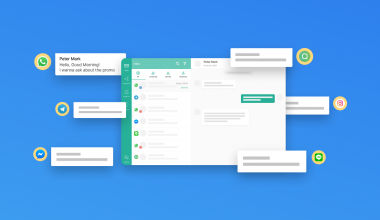
Patient replies flow into an omnichannel inbox for patient conversations alongside other channels such as email and live chat. Staff work from individual accounts, and supervisors route chats by department. A reschedule request reaches the booking team instead of sitting unread.
3. AI Agents for Routine Follow-Up Questions
Many replies to reminders are repetitive, such as parking, preparation steps, or opening hours. An AI Agent for rescheduling and preparation questions can answer from an approved knowledge base. It hands the chat to a human agent when the question turns clinical or sensitive.
4. Proven in Healthcare Engagement
KPJ Healthcare scaled patient engagement and reached an 88% booking conversion after centralising patient communication with Qiscus. Teams planning a similar rollout can review Qiscus patient engagement solutions for healthcare. If your hospital keeps an SMS gateway for fallback, you can talk to the Qiscus team about your reminder workflow and how it fits alongside that gateway.
Choose the Channel Your Patients Actually Read
The real question is not whether WhatsApp beats SMS. It is which patients each channel reaches, and what they can do once the reminder arrives. For most hospitals, the answer is WhatsApp as the default and SMS as the safety net. Patients get a reminder they can act on, and nobody falls through the gaps.
Start by segmenting your patients by channel access and reminder type. Then pick a tool that handles templates, replies, reporting, and fallback in one place. For a broader comparison of the two channels outside healthcare, read our guide to SMS marketing vs WhatsApp marketing. When you are ready, see how Qiscus can work for your healthcare team.
Frequently Asked Questions About Medical Reminders on WhatsApp vs SMS
WhatsApp is usually better for appointment reminders when patients use the app, because it supports confirm and reschedule buttons, media, and read signals. SMS remains better for patients without smartphones or data. Most hospitals get the best result by using WhatsApp first with SMS as a fallback.
Yes, hospitals can send medication reminders through the official WhatsApp Business API using approved templates and patient consent. Keep the wording discreet and avoid naming the drug or condition. Lock-screen previews can be visible to other people.
WhatsApp charges per delivered template message, with rates set by message category and the recipient’s country, according to Meta’s pricing documentation. SMS providers typically charge per message segment, and rates vary by destination. Compare both using your own patient volumes and the vendor’s platform fees.
Yes. WhatsApp requires businesses to obtain opt-in before sending template messages, and many privacy laws treat health-related messaging as sensitive. Record consent with a timestamp and give patients an easy way to switch channels or stop messages.
A well-designed reminder setup watches delivery statuses and triggers an SMS fallback when a WhatsApp message fails or stays undelivered past a set time. The fallback should carry the same appointment details. Agree on the trigger rules before launch so staff know which patients received which message.